
The eBooks we sell are sold as a single-user licence and are intended for the end user only.
The sale of some eBooks are restricted to certain countries. To alert you to such restrictions, please select the country of the billing address of your credit or debit card you wish to use for payment.
For further information see https://www.wildy.com/ebook-formats
Once the order is confirmed an e-mail will be sent to you to allow you to download the eBook. For UK purchases this will be automatic. For purchases outside the UK a member of staff will need to confirm the sale. (Staff are available to do this during normal business hours, Mon-Fri 8:30-17:00 UK time)
All eBooks are supplied firm sale and cannot be returned. If you believe there is a fault with your eBook then contact us on ebooks@wildy.com and we will help in resolving the issue. This does not affect your statutory rights.
Due to a technical issue some ebooks are not available to order.
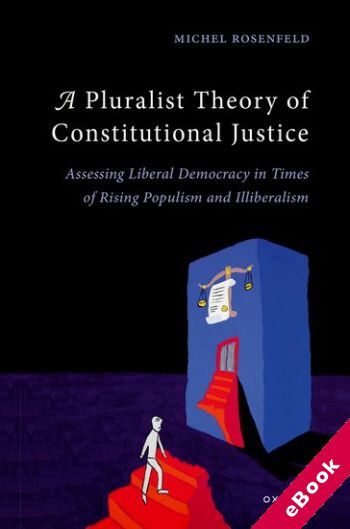
In recent years, liberal constitutionalism has come under sharp attack. Globalization has caused huge disparities in wealth, identity-based alienation triggered by mass migration, and accompanying erosions of democracy. Liberal populists have also adapted the framework of liberal institutionalism, masking their aim to subvert its core values. These developments bring the links between justice and the constitution to the fore, particularly concerning distributive justice in its three dimensions of redistribution, recognition, and representation.
A Pluralist Theory of Constitutional Justice provides a systematic account of the central role of distributive justice in the normative legitimation of liberal constitutions. The requirements of distributive justice are highly contested, and constitutions are susceptible to influencing those they govern. By drawing on Rawls' insight that distributive justice calls for "constitutional essentials", Rosenfeld advances the thesis that liberal constitutions must incorporate certain "justice essentials".
This book is divided into three sections. Part one examines the current legal, economic, political and ideological developments that pose challenges to the normative viability of liberal constitutionalism. Part two offers a rereading of philosophical and jurisprudential literature that sheds crucial light on the relationship between constitution and justice. Finally, part three makes a case for using a thoroughly pluralistic approach in the quest for a constitution's justice essentials.










