
The eBooks we sell are sold as a single-user licence and are intended for the end user only.
The sale of some eBooks are restricted to certain countries. To alert you to such restrictions, please select the country of the billing address of your credit or debit card you wish to use for payment.
For further information see https://www.wildy.com/ebook-formats
Once the order is confirmed an e-mail will be sent to you to allow you to download the eBook. For UK purchases this will be automatic. For purchases outside the UK a member of staff will need to confirm the sale. (Staff are available to do this during normal business hours, Mon-Fri 8:30-17:00 UK time)
All eBooks are supplied firm sale and cannot be returned. If you believe there is a fault with your eBook then contact us on ebooks@wildy.com and we will help in resolving the issue. This does not affect your statutory rights.
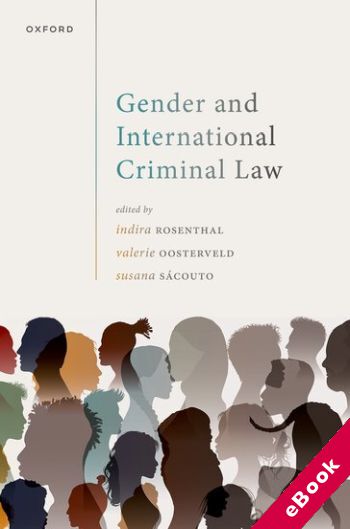
The last few decades have seen remarkable developments in international criminal justice, especially in relation to the pursuit of individuals responsible for sexual violence and other gender-based crimes. Historically ignored, justified, or minimised, this category of crimes now has a heightened profile in the international political and judicial arena. Despite this, gender is poorly understood, and blind spots, biases, and stereotypes prevail.
This book brings together leading feminist international criminal and humanitarian law academics and practitioners to examine the place of gender in international criminal law (ICL). It identifies and analyses past and current narrow understandings of gender, before considering how a limited conceptualization affects accountability efforts. The authors consider how best to implement a more nuanced understanding of gender in the practice of international criminal law by identifying possible responses, including embedding a sophisticated gender strategy into the practice of ICL, the gender-sensitive application of international human rights and humanitarian law, and encouraging a gender-competent approach to judging in ICL. The authors' aim is to strengthen efforts for accountability for all atrocity crimes-war crimes, crimes against humanity, genocide, and aggression.











