
The eBooks we sell are sold as a single-user licence and are intended for the end user only.
The sale of some eBooks are restricted to certain countries. To alert you to such restrictions, please select the country of the billing address of your credit or debit card you wish to use for payment.
For further information see https://www.wildy.com/ebook-formats
Once the order is confirmed an e-mail will be sent to you to allow you to download the eBook. For UK purchases this will be automatic. For purchases outside the UK a member of staff will need to confirm the sale. (Staff are available to do this during normal business hours, Mon-Fri 8:30-17:00 UK time)
All eBooks are supplied firm sale and cannot be returned. If you believe there is a fault with your eBook then contact us on ebooks@wildy.com and we will help in resolving the issue. This does not affect your statutory rights.
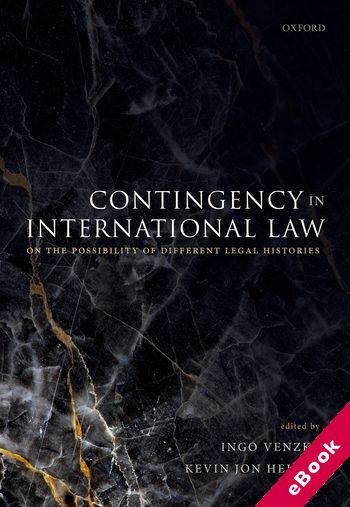
This book poses a question that is deceptive in its simplicity: could international law have been otherwise? Today, there is hardly a serious account left that would consider the path of international law to be necessary, and that would refute the possibility of a different law altogether. But behind every possibility of the past stands a reason why the law developed as it did. Only with a keen sense of why things turned out the way they did is it possible to argue about how the law could plausibly have turned out differently. The search for contingency in international law is often motivated, as it is in this volume, by a refusal to resign to the present state of affairs. By recovering past possibilities, this volume aims to inform projects of transformative legal change for the future. The book situates that search for contingency theoretically and carries it into practice across many fields, with chapters discussing human rights and armed conflict, migrants and refugees, the sea and natural resources, foreign investments and trade. In doing so, it shows how politically charged questions about contingency have always been.










