
The eBooks we sell are sold as a single-user licence and are intended for the end user only.
The sale of some eBooks are restricted to certain countries. To alert you to such restrictions, please select the country of the billing address of your credit or debit card you wish to use for payment.
For further information see https://www.wildy.com/ebook-formats
Once the order is confirmed an e-mail will be sent to you to allow you to download the eBook. For UK purchases this will be automatic. For purchases outside the UK a member of staff will need to confirm the sale. (Staff are available to do this during normal business hours, Mon-Fri 8:30-17:00 UK time)
All eBooks are supplied firm sale and cannot be returned. If you believe there is a fault with your eBook then contact us on ebooks@wildy.com and we will help in resolving the issue. This does not affect your statutory rights.
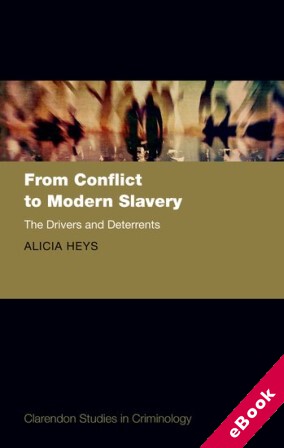
Modern Slavery and Conflict considers the lives of people after they have fled conflict and arrived in the UK. The book draws on insights from interviews with those who have experienced the UK immigration system, and observations are made about how the country's government and its restrictive and hostile immigration policies can increase the risk of modern slavery in the UK. With a broad definition of conflict as an organising concept, and which encourages understandings that go beyond war, this work contextualises these stories to understand why some people appear to be more at risk than others when escaping conflict situations. The work considers the ways in which conflict can facilitate modern slavery and how conflict limits people's agency and the legitimate options available to them. It is this restriction of agency in the face of inherently risky options, coupled with a disruption in support networks, that puts them at most risk of modern slavery.
Modern Slavery and Conflict's strength lies in its unique empirical focus on a comparison between first-hand accounts. It offers personal insights into the experiences of asylum seekers, refugees, and victims of modern slavery, and situates these within extant literature to identify specific aspects of people's journeys that can make them vulnerable to exploitation.











