
The eBooks we sell are sold as a single-user licence and are intended for the end user only.
The sale of some eBooks are restricted to certain countries. To alert you to such restrictions, please select the country of the billing address of your credit or debit card you wish to use for payment.
For further information see https://www.wildy.com/ebook-formats
Once the order is confirmed an e-mail will be sent to you to allow you to download the eBook. For UK purchases this will be automatic. For purchases outside the UK a member of staff will need to confirm the sale. (Staff are available to do this during normal business hours, Mon-Fri 8:30-17:00 UK time)
All eBooks are supplied firm sale and cannot be returned. If you believe there is a fault with your eBook then contact us on ebooks@wildy.com and we will help in resolving the issue. This does not affect your statutory rights.
Combatants are equal under the laws of armed conflict, regardless of whether the wars they fight are just or unjust, legal or illegal. They are permissible targets and can kill each other in battle. This basic feature of international law has been recently put into question by a group of moral philosophers known as revisionists, who argue that just combatants in an unjust war should be considered innocents, and their deaths considered murder.
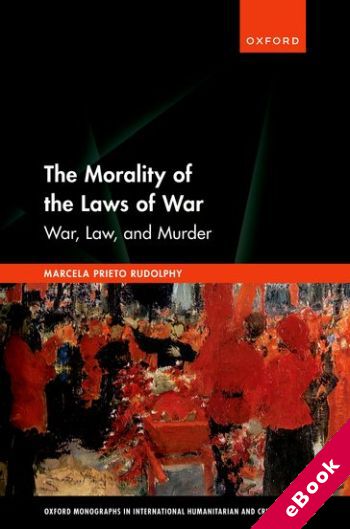
Dr. Prieto Rudolphy explains and assesses the conflict between the revisionist argument and the existing legal norms in The Morality of the Laws of War: War, Law, and Murder. The book provides an in-depth assessment of modern ethical thought on killing in wartime, deconstructing the revisionist view of war and offering a new perspective on the legal equality of combatants.
Prieto Rudolphy not only examines the tension between the revisionist morality and the traditional thesis of symmetry between combatants but proposes a contingent justification of the latter and an alternative morality of war. Underlying both is the inescapable fact that regulating war is always a moral compromise. At the same time, she argues that there is urgent moral pressure to improve our laws - to bring them closer to an ideal whereby war does not exist. The Morality of the Laws of War is a must-read for scholars of moral philosophy and international law, from students to experts, providing a thorough account of contemporary debates on the ethics of warfare and using nuanced arguments to illuminate a fresh perspective.











