The eBooks we sell are sold as a single-user licence and are intended for the end user only.
The sale of some eBooks are restricted to certain countries. To alert you to such restrictions, please select the country of the billing address of your credit or debit card you wish to use for payment.
For further information see https://www.wildy.com/ebook-formats
Once the order is confirmed an e-mail will be sent to you to allow you to download the eBook. For UK purchases this will be automatic. For purchases outside the UK a member of staff will need to confirm the sale. (Staff are available to do this during normal business hours, Mon-Fri 8:30-17:00 UK time)
All eBooks are supplied firm sale and cannot be returned. If you believe there is a fault with your eBook then contact us on ebooks@wildy.com and we will help in resolving the issue. This does not affect your statutory rights.
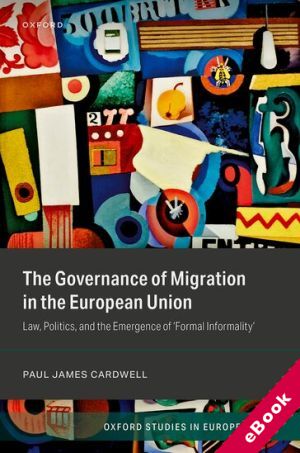
Migration sits at the top of the European Union's domestic and foreign policy agenda. Once a latecomer within the EU's set of competences, migration has become subject to an increasingly complex and contested set of institutional arrangements and processes, as the EU and its Member States grapple with the characterisation of irregular migration as a 'crisis'.
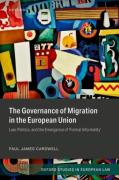
The Governance of Migration in the European Union: Law, Politics, and the Emergence of 'Formal Informality' examines the evolution of EU migration governance, encompassing both regular and irregular forms of migration, and highlights key differences between this field and broader patterns of EU integration. Drawing on institutional and constructivist theories, the book offers a critical analysis of the growing reliance on informal tools and instruments that play an increasingly significant role in contemporary migration governance, despite falling outside traditional legal mechanisms.
Paul James Cardwell explores the diversity of these informal instruments and maps their relationship with established legal tools such as regulations and directives. The book identifies the risks associated with the 'formal informality' of migration governance, including the absence of safeguards and transparency, and demonstrates how these practices threaten the EU's Treaty-based values—particularly respect for human rights and international law—as well as its commitments to democracy and good governance.
Addressing from a fresh perspective an issue that has dominated the EU agenda for more than fifteen years, The Governance of Migration in the European Union is essential reading for scholars and students of EU law and politics, as well as for legal practitioners and policymakers engaged with migration governance in Europe and beyond.