
The eBooks we sell are sold as a single-user licence and are intended for the end user only.
The sale of some eBooks are restricted to certain countries. To alert you to such restrictions, please select the country of the billing address of your credit or debit card you wish to use for payment.
For further information see https://www.wildy.com/ebook-formats
Once the order is confirmed an e-mail will be sent to you to allow you to download the eBook. For UK purchases this will be automatic. For purchases outside the UK a member of staff will need to confirm the sale. (Staff are available to do this during normal business hours, Mon-Fri 8:30-17:00 UK time)
All eBooks are supplied firm sale and cannot be returned. If you believe there is a fault with your eBook then contact us on ebooks@wildy.com and we will help in resolving the issue. This does not affect your statutory rights.
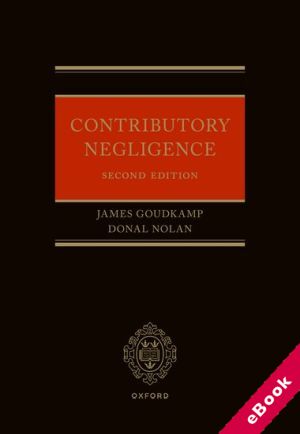
The doctrine of contributory negligence, which is a cornerstone of private law, is very frequently invoked in practice and also raises a host of pressing theoretical issues. This volume provides legal practitioners and scholars with a clear and comprehensive exposition of the legal principles governing contributory negligence alongside an empirically informed analysis of the way in which the doctrine operates in various recurrent factual scenarios. The doctrinal analysis is supplemented by a consideration of the historical antecedents of the relevant principles and their normative underpinnings. Central to the book are six chapters in which the authors provide an introductory overview of the doctrine; and then proceed to consider its scope; when a finding of contributory negligence will be made; the consequences of such a finding; the relationship between the doctrine and other rules; and matters relating to procedure and appeals. A detailed appendix sets out the discounts imposed for contributory negligence in a range of frequently occurring situations. Although the focus is on the position in the United Kingdom, account is also taken of the case law and literature in several other common law jurisdictions.
New to this Edition:











