
The eBooks we sell are sold as a single-user licence and are intended for the end user only.
The sale of some eBooks are restricted to certain countries. To alert you to such restrictions, please select the country of the billing address of your credit or debit card you wish to use for payment.
For further information see https://www.wildy.com/ebook-formats
Once the order is confirmed an e-mail will be sent to you to allow you to download the eBook. For UK purchases this will be automatic. For purchases outside the UK a member of staff will need to confirm the sale. (Staff are available to do this during normal business hours, Mon-Fri 8:30-17:00 UK time)
All eBooks are supplied firm sale and cannot be returned. If you believe there is a fault with your eBook then contact us on ebooks@wildy.com and we will help in resolving the issue. This does not affect your statutory rights.
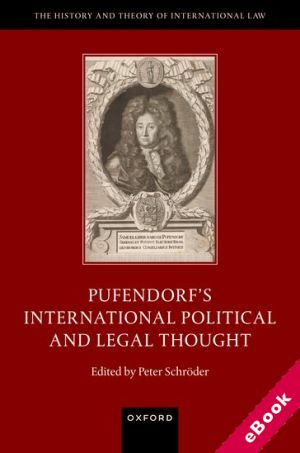
Contemporary research on the genealogy of human rights and the foundations of international law has brought renewed interest to the study of natural law in the early-modern period. German-born Samuel Pufendorf (1632-1694) is one of the eminent thinkers of this tradition, shaping the period's natural jurisprudence.
This unique collection of essays edited by historian of political thought Peter Schröder fills in a gap in Pufendorf scholarship, exploring the significance of his contributions to political and legal thought on a broad scale. While many books studying Pufendorf's work are confined to one specific academic area, Pufendorf's International Political and Legal Thought is truly interdisciplinary, and the first book to substantially address the international aspect of Pufendorf's work.
Ambitious and accessible, this collection is indispensable for scholars and students of intellectual history, political thought, international legal history, the Enlightenment, and political economy. With its focus on international law, Pufendorf's International Political and Legal Thought is a critical addition to the existing body of work on this renowned philosopher and jurist.










