The eBooks we sell are sold as a single-user licence and are intended for the end user only.
The sale of some eBooks are restricted to certain countries. To alert you to such restrictions, please select the country of the billing address of your credit or debit card you wish to use for payment.
For further information see https://www.wildy.com/ebook-formats
Once the order is confirmed an e-mail will be sent to you to allow you to download the eBook. For UK purchases this will be automatic. For purchases outside the UK a member of staff will need to confirm the sale. (Staff are available to do this during normal business hours, Mon-Fri 8:30-17:00 UK time)
All eBooks are supplied firm sale and cannot be returned. If you believe there is a fault with your eBook then contact us on ebooks@wildy.com and we will help in resolving the issue. This does not affect your statutory rights.
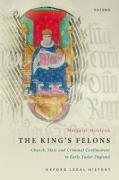
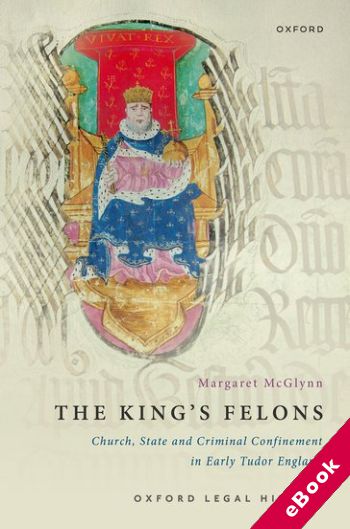
The King's Felons examines the subtle but intentional development of criminal confinement as an alternative to capital punishment in early Tudor England. As the judicial establishment looked for ways to enhance law and order without provoking political opposition, they increasingly turned to two traditional mitigations of criminal punishment: benefit of clergy and sanctuary.
Often reviled as corrupt clerical rights which served to undermine secular authority and the rule of law, benefit of clergy and sanctuary in fact provided the justices with room to manoeuvre, allowing them to punish a larger number of felons less harshly while avoiding political scrutiny. The King's Felons explores the evolution of this approach over a period of sixty years, allowing us to see not only the internal development of both law and process, but the ways in which the judicial system responded to external pressures. The dissolution of the monasteries between 1536 and 1540, together with the steady erosion of the wealth and power of the bishops, meant that the institutional and financial foundations on which the justices built this system began to crumble as it was reaching fruition. Over the next two decades they scrambled, with limited success, to secure some small vestiges of the system they had built. The epilogue connects the state of the system in the aftermath of this collapse to our existing understanding of the system in the later part of the century.
Providing the first detailed study of criminal justice in the early Tudor period, The King's Felons highlights the role of the Church in the administration of criminal justice and reframes our understanding of many significant acts of the Reformation parliament. This book is a must-read for students and scholars of Tudor history, legal historians and those interested in the role of the church with regard to politics, law, and crime.