
The eBooks we sell are sold as a single-user licence and are intended for the end user only.
The sale of some eBooks are restricted to certain countries. To alert you to such restrictions, please select the country of the billing address of your credit or debit card you wish to use for payment.
For further information see https://www.wildy.com/ebook-formats
Once the order is confirmed an e-mail will be sent to you to allow you to download the eBook. For UK purchases this will be automatic. For purchases outside the UK a member of staff will need to confirm the sale. (Staff are available to do this during normal business hours, Mon-Fri 8:30-17:00 UK time)
All eBooks are supplied firm sale and cannot be returned. If you believe there is a fault with your eBook then contact us on ebooks@wildy.com and we will help in resolving the issue. This does not affect your statutory rights.
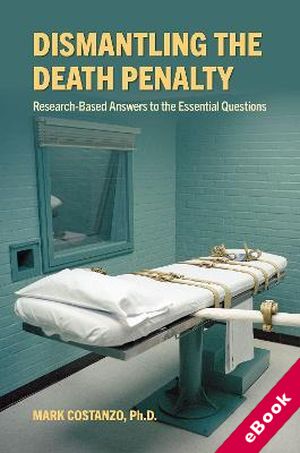
Dismantling the Death Penalty is a succinct, accessible, and lively overview of research on the costs and consequences of capital punishment. Professor Costanzo uses diverse sources of information—including closing arguments from murder trials; interviews with jurors; statistical analyses of murder rates; survey data; and quotes from defendants, politicians, and the families of victims—to understand the effects and effectiveness of the death penalty. Each chapter answers an essential question: How do juries decide who is sentenced to death? Do executions deter potential murderers? Does the public support the death penalty? Is it "cruel and unusual"? Is it cheaper than life imprisonment? How serious are errors and biases in the system? Is the death penalty morally justified? Although the emphasis is on social scientific research, this comprehensive analysis also places the practice of killing murderers in historical, political, and moral context. The opening chapter chronicles the long, bloody history of executions and changes in how, when, and why we kill criminals. The closing chapter evaluates the politics and future of capital punishment, as well as alternatives to execution.










