
The eBooks we sell are sold as a single-user licence and are intended for the end user only.
The sale of some eBooks are restricted to certain countries. To alert you to such restrictions, please select the country of the billing address of your credit or debit card you wish to use for payment.
For further information see https://www.wildy.com/ebook-formats
Once the order is confirmed an e-mail will be sent to you to allow you to download the eBook. For UK purchases this will be automatic. For purchases outside the UK a member of staff will need to confirm the sale. (Staff are available to do this during normal business hours, Mon-Fri 8:30-17:00 UK time)
All eBooks are supplied firm sale and cannot be returned. If you believe there is a fault with your eBook then contact us on ebooks@wildy.com and we will help in resolving the issue. This does not affect your statutory rights.
Brain science in the form of neuroscientific evidence now appears frequently in courtrooms and policy discussions alike. Many legal issues are at stake, such as how to separate the best uses of brain science information from those that are potentially biasing or misleading. It is crucial to evaluate brain science evidence in light of relevant legal standards (such as the Daubert and Frye Rules)
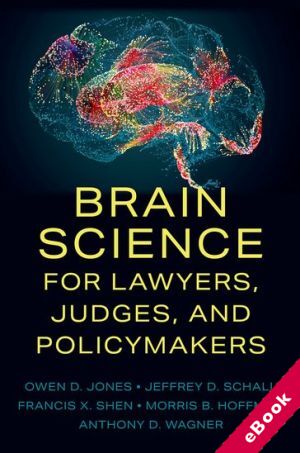
Brain Science for Lawyers, Judges, and Policymakers responds to this rapidly changing legal landscape, providing a user-friendly introduction to the fundamentals of neuroscience for lawyers, advocates, judges, legal academics, and policymakers. It features detailed but clear illustrations, as well as a comprehensive and accessible overview of developments in legally relevant neuroscience. Readers will learn brain science terms, how to understand and discuss brain structure and function in legally relevant contexts, and how to avoid over- or under-interpreting neuroscientific evidence. The book begins with a survey of the kinds of litigation, legislation, and regulation where neuroscience is currently being used. It provides accessible descriptions of basic brain anatomy and brain function as well as an overview of how modern technologies can reveal the brain structures and brain functions of individuals. It finishes with cautions and limitations, including timely and thought-provoking observations about where the future of neurolaw might lead. Throughout, the authors offer clear and concise guidance on understanding both the promise and the limitations of using brain science in law and policymaking.











