
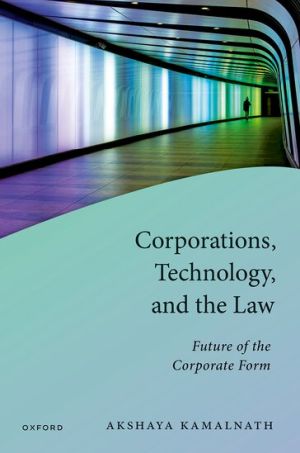
How should corporations adapt to an era defined by artificial intelligence, social media, and digital transformation? This volume examines the future of the corporate form in the context of technological disruption and its profound implications for business, law, and society.
Corporations have long been central to economic and social progress. Yet, as technology reshapes markets and governance, fundamental questions arise: What is the purpose of the corporation in the tech age? How should corporate law respond to new risks and opportunities? Corporations, Technology, and the Law: Future of the Corporate Form addresses these questions by proposing practical reforms to corporate governance and regulation that enable firms to harness technological benefits while mitigating harm.
Structured around core themes—corporate purpose, governance, investors, stakeholders, and regulation—the book offers a socio-legal and interdisciplinary analysis that moves beyond narrow doctrinal debates. It explores how emerging technologies, from AI-driven decision-making to virtual shareholder meetings, challenge traditional assumptions about corporate behaviour and accountability.
Accessible yet rigorous, this work will appeal to scholars of law and technology, policy-makers, and anyone concerned with the future of corporations and their role in society. By combining conceptual clarity with comparative insights, it provides a framework for rethinking corporate law across jurisdictions and for ensuring that corporations remain engines of progress in a rapidly evolving digital world.










