
The eBooks we sell are sold as a single-user licence and are intended for the end user only.
The sale of some eBooks are restricted to certain countries. To alert you to such restrictions, please select the country of the billing address of your credit or debit card you wish to use for payment.
For further information see https://www.wildy.com/ebook-formats
Once the order is confirmed an e-mail will be sent to you to allow you to download the eBook. For UK purchases this will be automatic. For purchases outside the UK a member of staff will need to confirm the sale. (Staff are available to do this during normal business hours, Mon-Fri 8:30-17:00 UK time)
All eBooks are supplied firm sale and cannot be returned. If you believe there is a fault with your eBook then contact us on ebooks@wildy.com and we will help in resolving the issue. This does not affect your statutory rights.
Due to a technical issue some ebooks are not available to order.
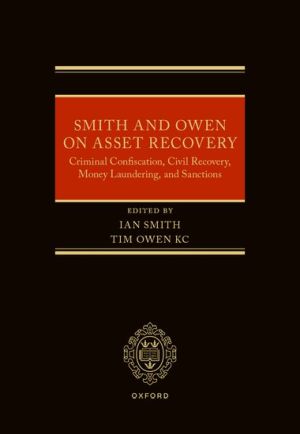
This definitive work covers the expanding law and practice of Asset Recovery in the domestic, European, and international spheres. It is designed for judges, legal practitioners, financial investigators and other professionals involved in investigations and legal proceedings for the recovery of the proceeds of crime, including terrorism.
Smith and Owen on Asset Recovery offers comprehensive coverage of the key areas of asset recovery pursued by law enforcement agencies: criminal confiscation in the criminal courts; and civil recovery in the civil courts. It also covers taxation of the proceeds of crime by administrative proceedings. The team of expert authors provide practical details on investigatory powers; compensation, restitution and forfeiture procedures and orders in the criminal courts; money laundering and terrorist financing offences and regulation; and on financial sanctions.
This book was previously published in a looseleaf format and is now edited into a hardback format with updated content that covers all recent developments in the recovery of the proceeds of crime, and, since Asset Recovery law itself is a complex blend of civil and criminal law, includes discussion of relevant developments in other areas of law such as property, trust, and insolvency law. Practitioners will welcome the increased procedural guidance and accessibility offered by the new book format.
New to this edition:










