
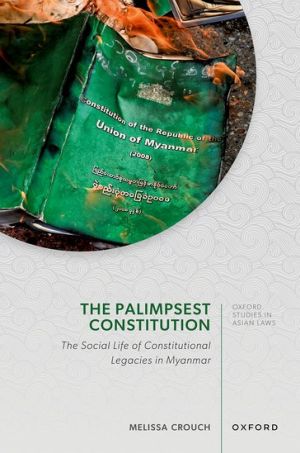
Since the mid-20th century, many former postcolonial states have engaged in multiple constitution-making exercises, with the turnover in written constitutions often due to coups or internal conflict. Conversely, people have resisted authoritarian rule through alternative constitution-making. The reality that most countries have had numerous official and unofficial constitutional texts begs the question: How do past constitutions matter in the present?
This volume explores the social life of constitutional legacies, or how past constitutions matter. Using the case of Myanmar, Professor Crouch demonstrates that constitutions are a palimpsest of past texts, ideas, and practices, an accumulation of contested legacies. Through constitutional ethnography, The Palimpsest Constitution traces Myanmar's modern constitutional history from the late colonial era through its postcolonial, socialist, and military regimes.
The Palimpsest Constitution captures the idea that contemporary debates about constitutional reform are informed by the contested legacies of the past. Today, the military insists on the endurance of its 2008 Constitution while pro-civilian actors resist military rule through alternative constitution-making endeavours. Offering a sociological view of constitutional endurance, the book demonstrates how the ongoing life of contested legacies is central to the struggle for constitutional democracy and civilian rule in Myanmar.










