
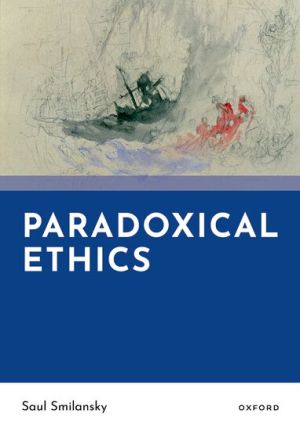
An open access title available under the terms of a CC BY-NC-ND 4.0 International licence.
Paradoxical Ethics is a unique book, exploring a crucial but neglected aspect of morality, introducing the reader to the gripping topic of absurdity, perversity, and paradox inherent in our moral world.
The book claims that the paradoxical is widespread, deep, and disturbing, and its recognition radically changes the way we ought to think about morality and life.
The idea of Paradoxical Ethics seeks to capture three things about morality, broadly understood. First, matters are paradoxical in the sense of being hard to believe—radically surprising, highly unlikely, unthinkable, absurd—but then we see the arguments. Second, we live in a morally paradoxical world. Much of moral reality is incredible, astounding, unruly, and full of weirdness, wonder, and mischief. Third, Paradoxical Ethics suggests an approach to doing moral philosophy that actively seeks out the paradoxical and looks for absurdity. It proposes a new way of opening ourselves to the world. Through new puzzles, paradoxes, perversities, and other such features, we see the power of philosophy.
The book is full of highly surprising and disruptive philosophical perplexities and insights on a large variety of topics, including pluralism, the importance of history, making a personal difference, negative stereotypes, getting away with immorality, and religion. We also see that the future is about to become even more paradoxical, with technological innovations and various other developments (such as environmental hazards) opening new horizons for Paradoxical Ethics.
Saul Smilansky begins the book with a detailed introduction, which explains the idea of paradoxical ethics. The 22 chapters that follow illustrate examples of Paradoxical Ethics, and are grouped into sections under the headings Moral Theory, Extending Moral Concern, Value and Meaning in Life, Teflon Immorality, Religion, and Free Will. The book ends with a detailed concluding chapter, which asks how we can and ought to live with the paradoxical. The extent to which ethics is paradoxical has not previously been studied by analytic philosophy, and the prevalence of the paradoxical has not been recognized. The book confronts absurd aspects of life which we have avoided and often actively sought to escape from and deceive ourselves about. It challenges us to think the seemingly unthinkable and thereby live more honestly with the paradoxical and the absurd.










