
Wildy Logo
(020) 7242 5778
enquiries@wildy.com

Book of the Month

Cover of Housing Law Handbook

Housing Law Handbook

Price: £85.00

Planning Law:
A Practitioner's
Handbook 2nd ed


 William Webster, Robert Weatherley


Welcome to Wildys

Watch


Corporate Insolvency Practice:
Litigation, Procedure
and Precedents 3rd ed


 Mark Watson-Gandy


Offers for Newly Called Barristers & Students

Special Discounts for Newly Called & Students

Read More ...


Secondhand & Out of Print

Browse Secondhand Online

Read More...


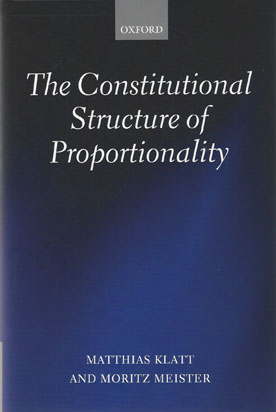
The Constitutional Structure of Proportionality


ISBN13: 9780199662463
Published: July 2012
Publisher: Oxford University Press
Country of Publication: UK
Format: Hardback
Price: £122.50


Despatched in 5 to 7 days.


Also available as
£76.99

As constitutional law globalizes, the quest for a common grammar or 'generic constitutional law' becomes more pressing. Proportionality is one of the most prominent and controversial components of the modern, global constitutional discourse.

In view of the alarming tension between the triumphant success of proportionality and the severity of the criticism directed towards it, this book offers an in-depth analysis of the critics of proportionality and demonstrates that their objections against the proportionality test are not convincing. It clarifies and further develops the current theories of proportionality and balancing.

Building upon on Robert Alexy's predominant principles theory, the book suggests several modifications to this theory. Drawing examples from the case law of the European Court of Human Rights, the European Court of Justice, and various national constitutional courts it illustrates the argument in favour of proportionality and demonstrates its relevance for deciding concrete cases.


Subjects:
Constitutional and Administrative Law
Contents:
Introduction
1. The Structure of the Proportionality Test
2. Rights, Interests, and Trumps
3. The Method of Balancing
4. Discretion and Deference
5. Positive Rights and Proportionality Analysis
6. Epistemic Reliabilities in Proportionality Analysis
7. Case Analysis: Otto-Preminger-Institut v Austria
8. Results







