
The eBooks we sell are sold as a single-user licence and are intended for the end user only.
The sale of some eBooks are restricted to certain countries. To alert you to such restrictions, please select the country of the billing address of your credit or debit card you wish to use for payment.
For further information see https://www.wildy.com/ebook-formats
Once the order is confirmed an e-mail will be sent to you to allow you to download the eBook. For UK purchases this will be automatic. For purchases outside the UK a member of staff will need to confirm the sale. (Staff are available to do this during normal business hours, Mon-Fri 8:30-17:00 UK time)
All eBooks are supplied firm sale and cannot be returned. If you believe there is a fault with your eBook then contact us on ebooks@wildy.com and we will help in resolving the issue. This does not affect your statutory rights.
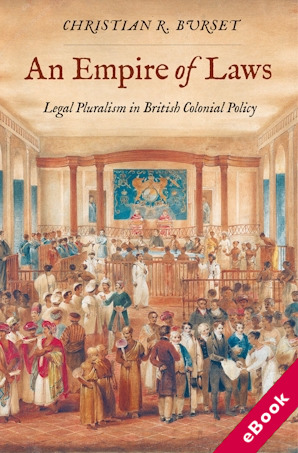
A compelling reexamination of how Britain used law to shape its empire.
For many years, Britain tried to impose its own laws on the peoples it conquered, and English common law usually followed the Union Jack. But the common law became less common after Britain emerged from the Seven Years’ War (1754–63) as the world’s most powerful empire. At that point, imperial policymakers adopted a strategy of legal pluralism: some colonies remained under English law, while others, including parts of India and former French territories in North America, retained much of their previous legal regimes.
As legal historian Christian R. Burset argues, determining how much English law a colony received depended on what kind of colony Britain wanted to create. Policymakers thought English law could turn any territory into an anglicized, commercial colony; legal pluralism, in contrast, would ensure a colony’s economic and political subordination. Britain’s turn to legal pluralism thus reflected the victory of a new vision of empire—authoritarian, extractive, and tolerant—over more assimilationist and egalitarian alternatives. Among other implications, this helps explain American colonists’ reverence for the common law: it expressed and preserved their equal status in the empire. This book, the first empire-wide overview of law as an instrument of policy in the eighteenth-century British Empire, offers an imaginative rethinking of the relationship between tolerance and empire.










