
The eBooks we sell are sold as a single-user licence and are intended for the end user only.
The sale of some eBooks are restricted to certain countries. To alert you to such restrictions, please select the country of the billing address of your credit or debit card you wish to use for payment.
For further information see https://www.wildy.com/ebook-formats
Once the order is confirmed an e-mail will be sent to you to allow you to download the eBook. For UK purchases this will be automatic. For purchases outside the UK a member of staff will need to confirm the sale. (Staff are available to do this during normal business hours, Mon-Fri 8:30-17:00 UK time)
All eBooks are supplied firm sale and cannot be returned. If you believe there is a fault with your eBook then contact us on ebooks@wildy.com and we will help in resolving the issue. This does not affect your statutory rights.
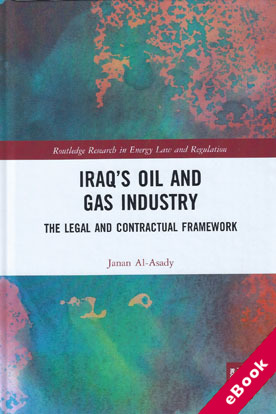
Oil, an integral part of the contemporary global economy, is considered a driving force behind the 2003 invasion of Iraq. Hydrocarbon reserves in Iraq have a significant role to play in global supply, with oil revenue accounting for more than 90% of Iraqi government income.
This book provides a comprehensive insight into the key foundations of Iraq’s oil industry and assists in the development of a core area of domestic law to promote economic recovery following years of instability. It addresses the development of oil legislation and the formation of contracts since the US and allied occupation of Iraq in 2003. Legislation is assessed against the framework of the constitution along with the different types of oil agreements and their terms.
The book looks at three main aspects of oil legislation, beginning with the validity and interpretation of the constitution as any subsequent legislation governing oil policy will be based upon this. The work then discusses whether the draft oil and gas law of 2007 and any subsequent oil legislation, including the law implemented by the Kurdish Regional Government in 2007, is valid. Finally, the book analyses the legitimacy of oil agreements entered into by the central and regional governments and whether these contain terms beneficial to the state and contracting party.
Providing an in-depth analysis of the origins and development of the legal framework of the oil industry in Iraq, the book acts as both a reference source and a springboard for future research across a range of legal, economic and policy perspectives. It will appeal to practitioners and academics working in energy law and international investment law, as well as policy-makers, legal advisors and those working in governments and energy companies.











