
The eBooks we sell are sold as a single-user licence and are intended for the end user only.
The sale of some eBooks are restricted to certain countries. To alert you to such restrictions, please select the country of the billing address of your credit or debit card you wish to use for payment.
For further information see https://www.wildy.com/ebook-formats
Once the order is confirmed an e-mail will be sent to you to allow you to download the eBook. For UK purchases this will be automatic. For purchases outside the UK a member of staff will need to confirm the sale. (Staff are available to do this during normal business hours, Mon-Fri 8:30-17:00 UK time)
All eBooks are supplied firm sale and cannot be returned. If you believe there is a fault with your eBook then contact us on ebooks@wildy.com and we will help in resolving the issue. This does not affect your statutory rights.
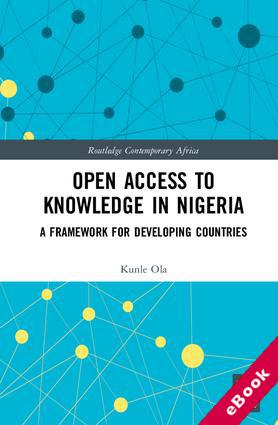
This book provides an analysis of the legal and policy dimensions of open access to research, education and public sector information with a focus on Nigeria. Kunle shows how open access has evolved across the world and how such initiatives could be implemented in Nigeria and other countries in the developing world.
The author argues for a platform where Nigerians are able to freely connect to the ‘global library’, through the open access dual platforms of self-archiving and open access publishing, thereby providing access to knowledge. The importance of connecting local works to the ‘global library’ to increase visibility and impact of such works is also underscored. This book furthers our understanding of open educational resources as alternative avenues to accessing education and seeks to foster citizenry participation, good governance, accountability, democratic values and spur creativity and innovation through open governance and access to public sector information.
Providing a framework for open access in developing countries, Open Access to Knowledge in Nigeria is an important read for scholars interested in knowledge production in Africa, development of the knowledge economy and the open access and Access to Knowledge movements.










