
The eBooks we sell are sold as a single-user licence and are intended for the end user only.
The sale of some eBooks are restricted to certain countries. To alert you to such restrictions, please select the country of the billing address of your credit or debit card you wish to use for payment.
For further information see https://www.wildy.com/ebook-formats
Once the order is confirmed an e-mail will be sent to you to allow you to download the eBook. For UK purchases this will be automatic. For purchases outside the UK a member of staff will need to confirm the sale. (Staff are available to do this during normal business hours, Mon-Fri 8:30-17:00 UK time)
All eBooks are supplied firm sale and cannot be returned. If you believe there is a fault with your eBook then contact us on ebooks@wildy.com and we will help in resolving the issue. This does not affect your statutory rights.
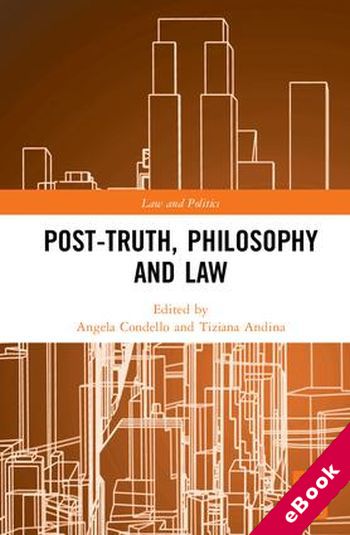
In the wake of Brexit and Trump, the debate surrounding post-truth fills the newspapers and is at the center of the public debate. Democratic institutions and the rule of law have always been constructed and legitimized by discourses of truth. And so the issue of "post-truth" or "fake truth" can be regarded as a contemporary degeneration of that legitimacy. But what, precisely, is post-truth from a theoretical point of view? Can it actually change perceptions of law, of institutions and political power? And can it affect our understanding of society and social relations? What are its ideological premises? What are the technical conditions that foster it? And most importantly, does it have anything to teach lovers of the truth? Pursuing an interdisciplinary perspective, this book gathers both well-known and newer scholars from a range of subject areas, to engage in a philosophical interrogation of the relationship between truth and law.











