
The eBooks we sell are sold as a single-user licence and are intended for the end user only.
The sale of some eBooks are restricted to certain countries. To alert you to such restrictions, please select the country of the billing address of your credit or debit card you wish to use for payment.
For further information see https://www.wildy.com/ebook-formats
Once the order is confirmed an e-mail will be sent to you to allow you to download the eBook. For UK purchases this will be automatic. For purchases outside the UK a member of staff will need to confirm the sale. (Staff are available to do this during normal business hours, Mon-Fri 8:30-17:00 UK time)
All eBooks are supplied firm sale and cannot be returned. If you believe there is a fault with your eBook then contact us on ebooks@wildy.com and we will help in resolving the issue. This does not affect your statutory rights.
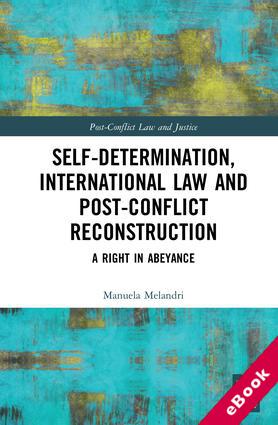
The right to self-determination has played a crucial role in the process of assisting oppressed people to put an end to colonial domination. Outside of the decolonization context, however, its relevance and application has constantly been challenged and debated.
This book examines the role played by self-determination in international law with regard to post-conflict state building. It discusses the question of whether self-determination protects local populations from the intervention of international state-builders in domestic affairs. With a focus on the right as it applies to the people of an independent state, it explores how self-determination concerns that arise in the post-conflict period play out in relation to the reconstruction process.
The book analyses the situation in Somalia as a means of drawing out the impact and significance of the legal principle of self-determination in the process of rebuilding post-conflict institutions. In so doing, it seeks to highlight how the relevance of self-determination is often overlooked in this context.










