The eBooks we sell are sold as a single-user licence and are intended for the end user only.
The sale of some eBooks are restricted to certain countries. To alert you to such restrictions, please select the country of the billing address of your credit or debit card you wish to use for payment.
For further information see https://www.wildy.com/ebook-formats
Once the order is confirmed an e-mail will be sent to you to allow you to download the eBook. For UK purchases this will be automatic. For purchases outside the UK a member of staff will need to confirm the sale. (Staff are available to do this during normal business hours, Mon-Fri 8:30-17:00 UK time)
All eBooks are supplied firm sale and cannot be returned. If you believe there is a fault with your eBook then contact us on ebooks@wildy.com and we will help in resolving the issue. This does not affect your statutory rights.
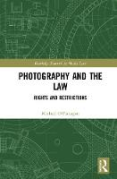
Photographers and publishers of photographs enjoy a wide range of legal rights including freedom of expression and of publication. They have a right to create and publish photographs. They may invoke their intellectual, moral and property rights to protect and enforce their rights in their created and/or published works. These rights are not absolute. This book analyses the various legal restrictions and prohibitions, which may affect these rights. Photography and the Law investigates the legal limitations faced by professional and amateur photographers and photograph publishers under Irish, UK and EU Law. Through an in-depth discussion of the personal rights of the public, including the right not to be harassed, the book gives a clear analysis of the current legal standpoint on the relationship between privacy and freedom of expression. Additionally, the book looks at the reconciliation of photographers' rights with the state's interest in public security and defence, alongside the enforcement of ethical and moral codes. Comparative legal standing in the European Union is used as a springboard to further analyse Irish and UK statutes and case law, including recent reforms and current proposals for future change. The book ends with pertinent suggestions of the necessary reforms and enactments required to rebalance the relationship between the personal rights of individuals, the state's duties and the protection of photographers' and photograph publishers' rights. By clearly explaining the theoretical and conceptual reasoning behind the current law, alongside proposed reforms, the book will be a useful tool for any student or academic interested in photography law, privacy and media law, alongside professional and amateur photographers and photograph publishers.