
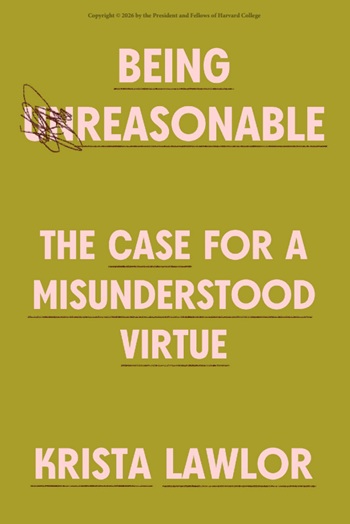
A leading philosopher explores what it means to be reasonable—and why it matters for the well-being of our society.
Reasonableness plays many roles in our lives. In Anglo-American law, it is the yardstick for a wide range of behavior—the “reasonable-person standard” governs everything from contract enforcement to killing in self-defense. In politics, a state can maintain a liberal democracy only if its citizens are reasonable. In ordinary life, we hold each other accountable to reason: We criticize the unreasonable of bosses who demand too much of our time or of partners who make decisions without regard for our preferences.
But what does it mean to be reasonable? Being reasonable is not the same as being rational. It is also different from being thoughtful. In Being Reasonable, Krista Lawlor argues that a reasonable person seeks to understand what is valuable. A reasonable person must be rational enough to figure out what is valuable and thoughtful enough to care about what other people find valuable, but rationality and thoughtfulness alone do not suffice to make one reasonable. Even an ideally rational and thoughtful person might fail to understand, or lack the concern to understand, what is valuable.
Being Reasonable is a comprehensive study of reasonableness. Lawlor provides an account of the nature of reasonableness and, further, explains how we manage to be reasonable. Humans discover what is valuable by listening to their emotions and by listening to each other. By taking command over our emotions, and by interacting attentively with others, we can live up to the standard set by society and law.
Krista Lawlor is Henry Waldgrave Stuart Professor of Philosophy at Stanford University










