
The eBooks we sell are sold as a single-user licence and are intended for the end user only.
The sale of some eBooks are restricted to certain countries. To alert you to such restrictions, please select the country of the billing address of your credit or debit card you wish to use for payment.
For further information see https://www.wildy.com/ebook-formats
Once the order is confirmed an e-mail will be sent to you to allow you to download the eBook. For UK purchases this will be automatic. For purchases outside the UK a member of staff will need to confirm the sale. (Staff are available to do this during normal business hours, Mon-Fri 8:30-17:00 UK time)
All eBooks are supplied firm sale and cannot be returned. If you believe there is a fault with your eBook then contact us on ebooks@wildy.com and we will help in resolving the issue. This does not affect your statutory rights.
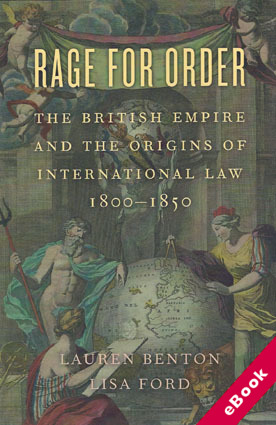
International law burst on the scene as a new field in the late nineteenth century. Where did it come from? Rage for Order finds the origins of international law in empires especially in the British Empire s sprawling efforts to refashion the imperial constitution and use it to order the world in the early part of that century.
Lauren Benton and Lisa Ford uncover the lost history of Britain s global empire of law in colonial conflicts and bureaucratic dispatches rather than legal treatises and case law. Tracing constitutional politics around the world, Rage for Order shows that attempts to refashion the British imperial constitution touched on all the controversial issues of the day, from slavery to revolution.
Scandals in turbulent colonies targeted petty despots and augmented the power of the Crown to intervene in the administration of justice. Campaigns to police piracy and slave trading linked British interests to the stability of politically fragmented regions.
Dull bureaucrats dominated legal reform, but they did not act in isolation. Indigenous peoples, slaves, convicts, merchants, and sailors all scrambled to play a part in reordering the empire and the world beyond it. Yet, through it all, legal reform focused on promoting order, not advancing human rights or charting liberalism.
Rage for Order maps a formative phase in world history when imperial, not international, law anchored visions of global order. This sweeping story changes the way we think about the legacy of the British Empire and the meaning of international law today.











