
The eBooks we sell are sold as a single-user licence and are intended for the end user only.
The sale of some eBooks are restricted to certain countries. To alert you to such restrictions, please select the country of the billing address of your credit or debit card you wish to use for payment.
For further information see https://www.wildy.com/ebook-formats
Once the order is confirmed an e-mail will be sent to you to allow you to download the eBook. For UK purchases this will be automatic. For purchases outside the UK a member of staff will need to confirm the sale. (Staff are available to do this during normal business hours, Mon-Fri 8:30-17:00 UK time)
All eBooks are supplied firm sale and cannot be returned. If you believe there is a fault with your eBook then contact us on ebooks@wildy.com and we will help in resolving the issue. This does not affect your statutory rights.
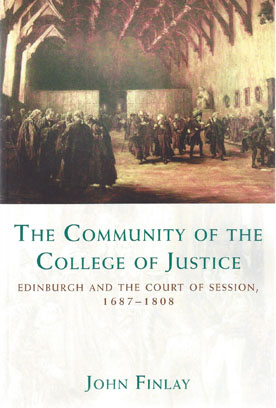
This is an institutional history of Scotland's 18th century legal community. How important can a court and its members be in influencing the development of a country? In Scotland's case, the answer is surprising.
The remarkable metamorphosis of 18th-century Edinburgh, from crisis conditions in the 1690s through the Union to the intellectual heights of Enlightenment and the development of the spectacular New Town, owed a great deal to those who spent their professional lives working in the Court of Session as members of the unique institution known as the College of Justice. James Boswell, Lord Kames, Henry Dundas and Walter Scott are just some of those who emerged from the College to influence Scotland's place in Europe.
This study investigates the important role of College members in the cultural and economic flowering of Scotland as a whole, and Edinburgh in particular, and argues that a single Law institution had a marked influence on the Scottish cultural landscape to the present day.
This is an original study making use of a range of manuscript sources. No existing work has made such extensive use of session papers or has looked at the manuscript town council minutes of Edinburgh in such depth for legal historical purposes. It reveals the working milieu within which Scots law developed at a key period following the parliamentary Union of 1707 as Scots law consolidated itself as one of the world's few mixed jurisdictions.
It shows the development of Edinburgh's history as an example of community interaction in an urban setting in comparison to courts across Europe and elsewhere. Readers interested in social history will find out a great deal about the collective working experience of a range of individuals of very different backgrounds and status. Members of the College included the very high and the very low and in many ways it is a unique institution.










