
Wildy Logo
(020) 7242 5778
enquiries@wildy.com

Book of the Month

Cover of Arbitration of Commercial Disputes: English and International Law and Practice

Arbitration of Commercial Disputes: English and International Law and Practice

Price: £225.00

Land Registration Manual
4th ed


 Ash Jones


Welcome to Wildys

Watch


Judicial Cooperation in Commercial Litigation 3rd ed (The British Cross-Border Financial Centre World)


 Ian Kawaley, David Doyle, Shade Subair Williams


Offers for Newly Called Barristers & Students

Special Discounts for Newly Called & Students

Read More ...


Secondhand & Out of Print

Browse Secondhand Online

Read More...


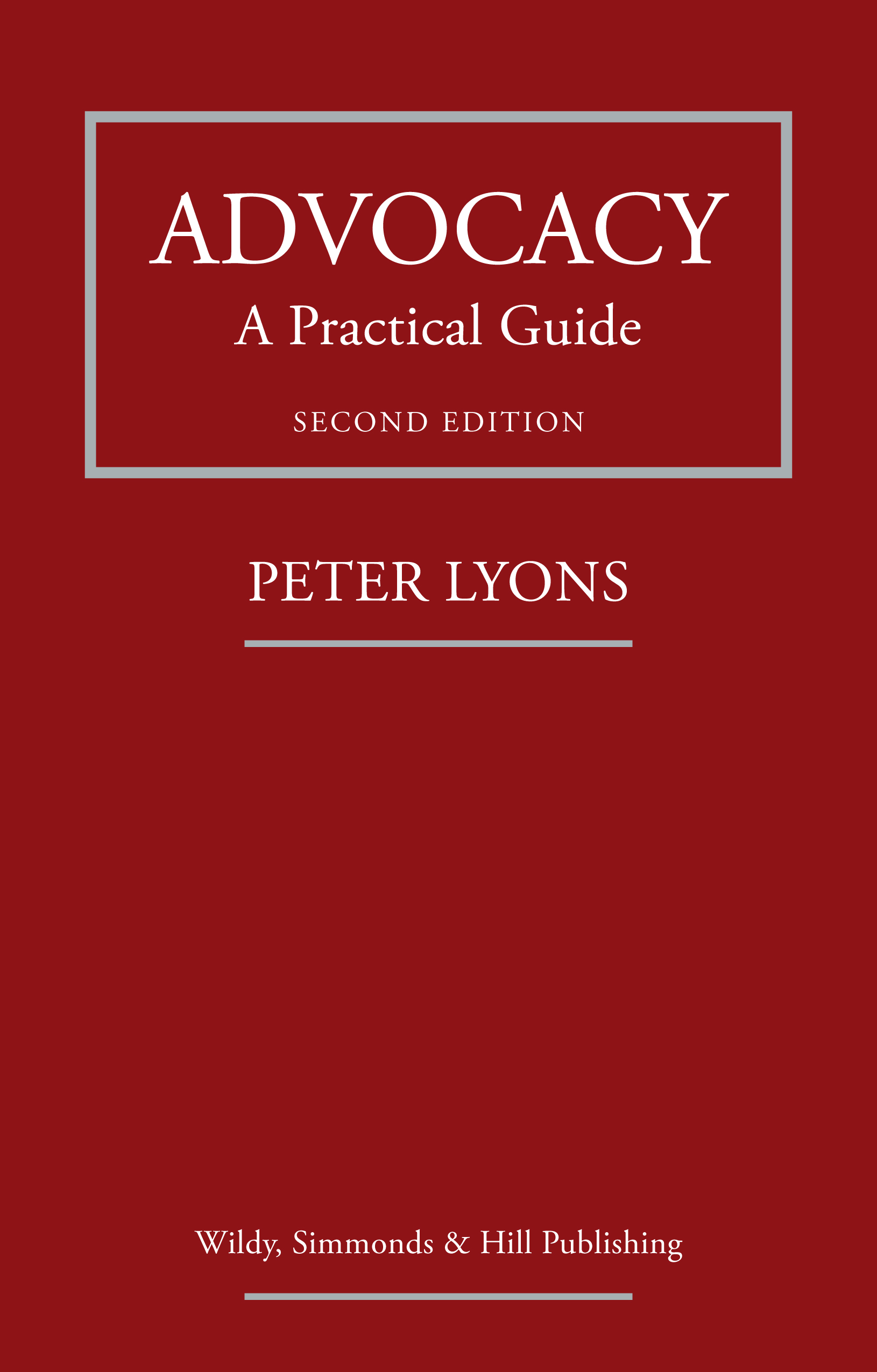
Advocacy: A Practical Guide 2nd ed


ISBN13: 9780854903139
Previous Edition ISBN: 9780854902668
To be Published: June 2026
Publisher: Wildy, Simmonds and Hill Publishing
Country of Publication: UK
Format: Paperback
Price: £25.00


Advocacy: A Practical Guide is an invaluable reference for those who wish to learn essential advocacy skills as well as those seeking to make their advocacy more effective.

With a focus on civil advocacy and arbitration, the book provides guidance on a range of matters from undertaking case analysis and overcoming nerves to handling witnesses and making trial speeches. It does not claim to be prescriptive and say this is the only way. The book is intended to be easy to read and absorb, and is designed to give the reader confidence and support.

For this second edition, the text has been fully updated by Chris Taylor, and a new chapter has been included on online advocacy.

The book is aimed at barristers, solicitors, arbitration lawyers, patent attorneys and students. International lawyers will also find the book helpful, providing as it does, a better understanding of common law practice such as cross-examination..

Subjects:
Advocacy, Legal Skills and Method, Wildy, Simmonds and Hill, Courts and Procedure
Contents:
Preface to the Second Edition
Foreword to the First Edition
About the Authors

PRESENTATION SKILLS
1. Substance
1.1 Knowledge of subject
1.2 Structure
1.3 Tell a story
1.4 Simple words
1.5 Picture words
1.6 Putting it into practice
2. Style
2.1 Beating nerves
2.2 Practice
2.3 Stance and gestures
2.4 Timing
2.5 Sounding convinced
2.6 Paying attention
2.7 The digital age
2.8 Sender – message – receiver
3. Presentation skills: checklist
3.1 Preparation
3.2 Delivery

THE QUALITIES OF A GOOD ADVOCATE
1. Integrity
2. A good voice
3. Presence
4. A quick adaptable mind
5. Knowledge of human nature
6. Courage
7. Well-mannered and in control of temper
8. Knowledge of the facts and the law
9. Norman Birkett’s checklist

PROFESSIONAL CONDUCT
1. The advocate’s duty
2. Rules of conduct
3. Your instructions
4. The advocate’s view
5. Bringing the profession into disrepute
6. Courtesy in court
7. Professional conduct: checklist

CASE ANALYSIS
1. The facts
2. Parties
3. Evidence
4. Conclusions
5. Case theory
6. Cross-examination
7. How to analyse a case
8. The blitz
9. The edit
9.1 Fact one: C is an antique dealer
9.2 Fact two: C was talked into it by D
9.3 Fact three: Worthington thinks the sculpture is a fake
9.4 Fact four: Sculpture is worth £3,000
9.5 Fact five: C offered £820,000
9.6 Last fact: D described it as Assyrian
10. Forming the case theory
11. The blitz and its uses
12. Why a case theory is important
13. Preparation and proof
14. Case analysis: checklist

INTERIM APPLICATIONS (MOTIONS)
1. Preparing the submission
1.1 Structure
1.2 Know all of the facts
1.3 Know the procedural history
1.4 Know where your documents are
1.5 Anticipate your opponent’s arguments
1.6 Find out about the judge
1.7 Research the law and the judge’s powers
1.8 Have submissions on costs ready: win or lose
2. Making the submission
2.1 Address the court appropriately
2.2 Announcing your appearance
2.3 Outline the application and the requested relief
2.4 Structure your submission
2.5 Make the judge’s job easier
2.6 Respond directly to questions
2.7 Be flexible and make concessions if appropriate
2.8 Be courteous and professional
2.9 Make a note
2.10 Read the judge
2.11 Using a skeleton
2.12 Reply if necessary
2.13 After the decision
2.14 Knowledge of the rules
3. Interim applications: checklist
3.1 Preparing the submission
3.2 Making the submission
3.3 After the decision

ONLINE ADVOCACY
1. Presenting online
2. Set-up
2.1 Remove distractions
2.2 Choose your location
2.3 Lighting
2.4 Your appearance on screen
2.5 Virtual backgrounds
2.6 Multiple screens
2.7 Test your set-up
3. Hearing preparation
3.1 Procedural considerations
3.2 Bundles
3.3 Witnesses
3.4 Practical considerations
4. At the hearing
4.1 Etiquette
4.2 Handling the camera
4.3 Gestures and body language
4.4 Voice control
4.5 Referring to notes
4.6 Use of visuals
5. Online advocacy: checklist
5.1 Set-up
5.2 Hearing preparation
5.3 At the hearing

WRITTEN ADVOCACY
1. Madman, architect, builder, judge
2. Constructing the sentences
2.1 Lord Denning
2.2 George Orwell
2.3 Bertrand Russell
3. Statements of case and points of claim
4. Witness statements
5. And finally

SKELETON ARGUMENTS
1. Skeleton arguments: checklist
1.1 Purpose
1.2 Technical content
1.3 Referring to authorities
1.4 Formal matters
1.5 Style

PREPARING WITNESSES
1. Encouraging false evidence
2. Coaching
2.1 England
2.2 Australia
2.3 United States
3. Expert witnesses
4. How judges see witnesses
5. Contemporary documents
6. Practical matters

EXAMINATION-IN-CHIEF OR DIRECT EXAMINATION
1. No leading questions
2. Start your questions with the words ‘what’, ‘when’, ‘where’, ‘why’, ‘how’, ‘who’, ‘please
describe’, ‘tell the court’
3. Simple words and short questions
4. Style
5. Arrange your facts
6. Sources of evidence
7. Controlling the witness
8. What happened next?
9. Know the answer
10. Avoid compound questions
11. Listen to the answer
12. Take the sting out of the cross-examination
13. Avoid gremlins
14. End strongly

CROSS-EXAMINATION
1. The purpose of cross-examination
2. Showing evidence to be unreliable
2.1 Mistaken, lazy or unprepared
2.2 Incompetent
2.3 Negligent
2.4 Lacking authority
2.5 Unqualified
2.6 Speculating or exaggerating
2.7 Biased or defensive
2.8 Hiding something
2.9 A combination of the above objectives
2.10 Previous behaviour in any of the above
3. Preparing to cross-examine
4. Taking facts from other witness statements
5. Is the cross-examination necessary?
6. Putting your case
7. Delivery
8. Know the answer or be sure it won’t hurt you
9. Assert: don’t ask
10. One fact per question
11. Don’t argue with the witness
12. Making comments is wrong
13. Cutting off answers
14. Questions based on controversial assumptions
15. Questions on stereotypes
16. Vulnerable witnesses
17. Controlling the witness
18. Causing the problem
19. Getting the answer you want
20. More serious offences
21. Refreshing a witness’s memory in cross-examination
22. Impeachment
23. The talkative witness
24. When to ask open questions
25. The risks of open questions, arguments and conclusions
26. Don’t be pompous
27. The ‘Did you?’ question
28. Collateral questions
29. Cross-examination on documents
30. How the cross-examination fits into closing
31. How to finish
32. Cross-examination: checklist
32.1 Preparation
32.2 Delivery
32.3 Style

RE-EXAMINATION
1. Re-examination: checklist

EXPERT WITNESSES
1. Direct examination of the expert
1.1 Introduction and qualifications
1.2 Method
1.3 Opinion
2. Cross-examination
2.1 Preparation
2.2 Your opponent’s expert
2.3 The opposing expert’s method
2.4 The cross-examination itself
2.5 Case study: cross-examination of the claimant’s expert
2.6 Case study: cross-examination of the defendant’s expert
3. Re-examination

ADDRESSES
1. Striking the right note
2. The opening address
3. The closing address

SUBMISSIONS OF LAW
1. Preparation
1.1 Know the court and its powers
1.2 Know the facts
1.3 Know the law
1.4 Cite authorities properly
1.5 Know where your documents are
1.6 Anticipate your opponent’s arguments
1.7 Anticipate what the court might ask
2. Structure
3. Argument dilution
4. Know what order the court should make
5. Method
5.1 The psychology of a judge
5.2 Point-first advocacy
5.3 Say why you should win
not why the other side should lose
5.4 Pick only the best points to argue
5.5 Don’t read
5.6 Keep to the point
6. Answering questions
6.1 Answer questions directly
6.2 How to answer
6.3 The purpose of the question
6.4 If you don’t know the answer
7. Your style – impact
8. Skilful advocates make it simple
9. Credibility
10. When to reply
11. Does oral advocacy make a difference?
12. Conclusion
13. Addresses and submissions of law: checklist
13.1 Nerves
13.2 Structure
13.3 Notes
13.4 Stance and gestures
13.5 Delivery

APPENDICES
1. Case Study: Cavendish v Downham
2. Further Reading

Acknowledgements
Index









