The eBooks we sell are sold as a single-user licence and are intended for the end user only.
The sale of some eBooks are restricted to certain countries. To alert you to such restrictions, please select the country of the billing address of your credit or debit card you wish to use for payment.
For further information see https://www.wildy.com/ebook-formats
Once the order is confirmed an e-mail will be sent to you to allow you to download the eBook. For UK purchases this will be automatic. For purchases outside the UK a member of staff will need to confirm the sale. (Staff are available to do this during normal business hours, Mon-Fri 8:30-17:00 UK time)
All eBooks are supplied firm sale and cannot be returned. If you believe there is a fault with your eBook then contact us on ebooks@wildy.com and we will help in resolving the issue. This does not affect your statutory rights.
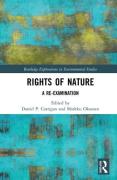
Rights of nature is an idea that has come of age. In recent years, a diverse range of countries and jurisdictions have adopted these norms, which involve granting legal rights to nature or natural objects, such as rivers, forests, or ecosystems. This book critically examines the idea of natural objects as right-holders, and analyses legal cases, policies, and philosophical issues relating to this development.
Drawing on contributions from a range of experts in the field, Rights of Nature: A Re-examination investigates the potential for this innovative idea to revolutionize the concepts of rights, standing, and recognition as traditionally understood in many legal systems. Taking as its starting point Stone’s influential 1972 article ‘Should Trees Have Standing?’, the book examines the progress rights of nature have made since that time, by identifying central themes, unifying principles, and key distinctions in how rights of nature discourse has been operationalized in the disciplines of law, philosophy, and the social sciences. These themes and principles are illustrated through a wide variety of examples, including ecosystem services, indigenous thinking, and ecological restoration, demonstrating how the relationship between humanity and the natural world may be transforming.
Taking a philosophical, political, and legal perspective, this book will be of great interest to students and scholars of environmental law and policy, environmental ethics, and philosophy.