
The eBooks we sell are sold as a single-user licence and are intended for the end user only.
The sale of some eBooks are restricted to certain countries. To alert you to such restrictions, please select the country of the billing address of your credit or debit card you wish to use for payment.
For further information see https://www.wildy.com/ebook-formats
Once the order is confirmed an e-mail will be sent to you to allow you to download the eBook. For UK purchases this will be automatic. For purchases outside the UK a member of staff will need to confirm the sale. (Staff are available to do this during normal business hours, Mon-Fri 8:30-17:00 UK time)
All eBooks are supplied firm sale and cannot be returned. If you believe there is a fault with your eBook then contact us on ebooks@wildy.com and we will help in resolving the issue. This does not affect your statutory rights.
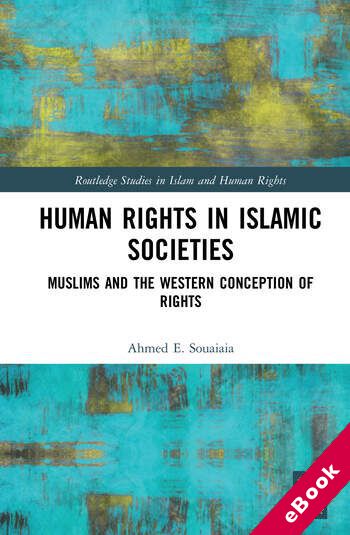
This book compares Islamic and Western ideas of human rights in order to ascertain which human rights, if any, can be considered universal. This is a profound topic with a rich history that is highly relevant within global politics and society today.
The argument in this book is formed by bringing William Talbott’s Which Rights Should Be Universal? (2005) and Abdulaziz Sachedina’s Islam and the Challenge of Human Rights (2014) into conversation. By bridging the gap between cultural relativists and moral universalists, this book seeks to offer a new model for the understanding of human rights. It contends that it is a universal tendency toward cruelty that produces universal counter-cruelty. Thus, a dynamic equilibrium is created that can be made to endure for as long as the power differential does. It goes on to state that the persistent impulse to inflict cruel acts is checked only by the commitment of citizens to check the powerful--the State--with civil society.
Engaging with Islamic and Western, historical and contemporary and relativist and universalist thought, this book is a fresh take on a perennially important issue. As such, it will be a first-rate resource for any scholars working in Religious Studies, Islamic Studies, Middle East Studies, Ethics, Sociology and Law and Religion.










