
The eBooks we sell are sold as a single-user licence and are intended for the end user only.
The sale of some eBooks are restricted to certain countries. To alert you to such restrictions, please select the country of the billing address of your credit or debit card you wish to use for payment.
For further information see https://www.wildy.com/ebook-formats
Once the order is confirmed an e-mail will be sent to you to allow you to download the eBook. For UK purchases this will be automatic. For purchases outside the UK a member of staff will need to confirm the sale. (Staff are available to do this during normal business hours, Mon-Fri 8:30-17:00 UK time)
All eBooks are supplied firm sale and cannot be returned. If you believe there is a fault with your eBook then contact us on ebooks@wildy.com and we will help in resolving the issue. This does not affect your statutory rights.
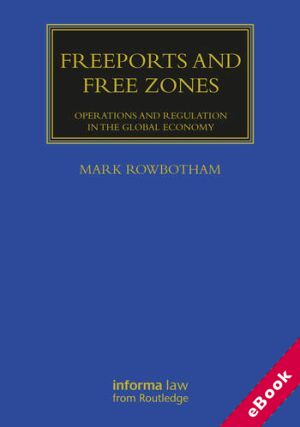
This book explains the definition, concepts, practices and procedures of free zone operations; how they are created, how they operate, and their benefits to the global and national economy.
Readers will be able to understand why free zones exist, their role in the development and maintenance of international trade, and how they contribute to national and global economic development and wellbeing, especially in developing nations. The author explains the processes in the establishment of free zones, and how government legislation and initiatives assist in this process. The book comprehensively but accessibly covers the topics of freeports, free zones, export processing zones (EPZs) and special economic zones (SEZs), as well as issues such as customs requirements, free zone law and government initiatives, including the new UK Freeport initiative. It analyses the role of such zones in global economic development and considers the challenges and issues related to free zone development and operation, including security and potential crime. The book also provides a series of case studies into selected global examples of free zones, EPZs and SEZs.
Freeports and Free Zones will have a broad readership, being of interest to global economic, fiscal and government institutions, policymakers, legal practitioners and advisers, economic and business advisers, port and airport authorities, and major multinational enterprises. It will be especially relevant to the food, automotive, defence, manufacturing, logistics, FMCG, pharmaceutical, aviation and maritime industries.











