
The eBooks we sell are sold as a single-user licence and are intended for the end user only.
The sale of some eBooks are restricted to certain countries. To alert you to such restrictions, please select the country of the billing address of your credit or debit card you wish to use for payment.
For further information see https://www.wildy.com/ebook-formats
Once the order is confirmed an e-mail will be sent to you to allow you to download the eBook. For UK purchases this will be automatic. For purchases outside the UK a member of staff will need to confirm the sale. (Staff are available to do this during normal business hours, Mon-Fri 8:30-17:00 UK time)
All eBooks are supplied firm sale and cannot be returned. If you believe there is a fault with your eBook then contact us on ebooks@wildy.com and we will help in resolving the issue. This does not affect your statutory rights.
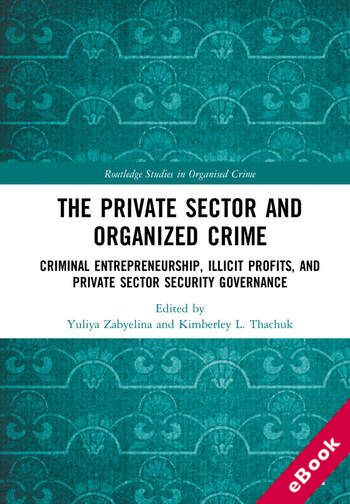
This book contributes to the literature on organized crime by providing a detailed account of the various nuances of what happens when criminal organizations misuse or penetrate legitimate businesses. It advances the existing scholarship on attacks, infiltration, and capture of legal businesses by organized crime and sheds light on the important role the private sector can play to fight back. It considers a range of industries from bars and restaurants to labour-intensive enterprises such as construction and waste management, to sectors susceptible to illicit activities including transportation, wholesale and retail trade, and businesses controlled by fragmented legislation such as gambling.
Organized criminal groups capitalize on legitimate businesses beleaguered by economic downturns, government regulations, natural disasters, societal conflict, and the COVID-19 pandemic. To survive, some private companies have even become the willing partners of criminal organizations. Thus, the relationships between licit businesses and organized crime are highly varied and can range from victimization of businesses to willing collusion and even exploitation of organized crime by the private sector – albeit with arrangements that typically allow plausible deniability. In other words, these relationships are highly diverse and create a complex reality which is the focus of the articles presented here.
This book will appeal to students, academics, and policy practitioners with an interest in organized crime. It will also provide important supplementary reading for undergraduate and graduate courses on topics such as transnational security issues, transnational organized crime, international criminal justice, criminal finance, non-state actors, international affairs, comparative politics, and economics and business courses.











