
The eBooks we sell are sold as a single-user licence and are intended for the end user only.
The sale of some eBooks are restricted to certain countries. To alert you to such restrictions, please select the country of the billing address of your credit or debit card you wish to use for payment.
For further information see https://www.wildy.com/ebook-formats
Once the order is confirmed an e-mail will be sent to you to allow you to download the eBook. For UK purchases this will be automatic. For purchases outside the UK a member of staff will need to confirm the sale. (Staff are available to do this during normal business hours, Mon-Fri 8:30-17:00 UK time)
All eBooks are supplied firm sale and cannot be returned. If you believe there is a fault with your eBook then contact us on ebooks@wildy.com and we will help in resolving the issue. This does not affect your statutory rights.
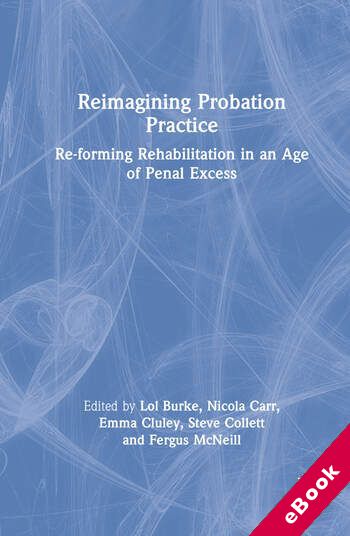
This book provides a comprehensive and positive reimagining of probation practice in England and Wales across all the key settings in which work with people subject to supervision takes place. Bringing together chapters co-authored by academics and practitioners, it offers an overall conceptualisation of the rehabilitative endeavour within the realities of a probation service recently unified after the acknowledged failure of the Transforming Rehabilitation reforms.
Reimagining Probation Practice covers the main themes and job functions of probation practice, from court work to individual and group interventions, to resettlement and public protection, to partnerships, to education and training. Each chapter includes a brief critical history of the area of practice, the current policy context, the applicability of different forms of rehabilitation (personal, legal/judicial, social and moral) to this area of practice, an overview of current good practice, and areas in need of development. The book argues that the principles of parsimony, proportionality and productiveness should be applied to the criminal justice system in its work to rehabilitate individuals.
This book is essential reading for practitioners and all those engaged in probation training, as well as policy makers, leaders, managers and those interested in social and criminal justice.










