The eBooks we sell are sold as a single-user licence and are intended for the end user only.
The sale of some eBooks are restricted to certain countries. To alert you to such restrictions, please select the country of the billing address of your credit or debit card you wish to use for payment.
For further information see https://www.wildy.com/ebook-formats
Once the order is confirmed an e-mail will be sent to you to allow you to download the eBook. For UK purchases this will be automatic. For purchases outside the UK a member of staff will need to confirm the sale. (Staff are available to do this during normal business hours, Mon-Fri 8:30-17:00 UK time)
All eBooks are supplied firm sale and cannot be returned. If you believe there is a fault with your eBook then contact us on ebooks@wildy.com and we will help in resolving the issue. This does not affect your statutory rights.
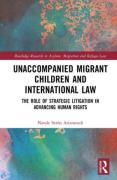
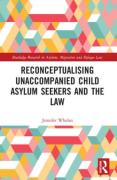
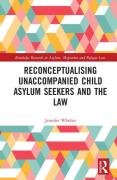
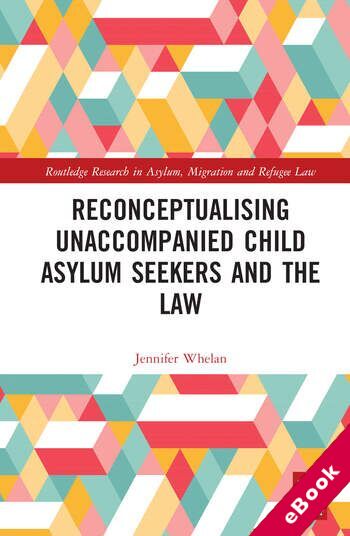
Unaccompanied child asylum seekers are amongst the world’s most vulnerable populations and their numbers are increasing. The intersection of their age, their seeking asylum, and separation from their parents creates a specific and acute triple burden of vulnerability. Their precariousness has long been recognised in international human rights law. Yet human rights-based responses have been subordinated to progressive global securitisation of irregular migration through interception, interdiction, extraterritorial processing, and immigration detention. Such an approach necessitates an urgent paradigm shift in how we comprehend their needs as children, the impact of punitive border control laws on them, and the responsibility of states to these children when they arrive at their borders seeking asylum.
This book reconceptualises the relationship between unaccompanied child asylum seekers and states. It proposes a new conceptual framework by applying international human rights law, childhood studies, and vulnerability theory scholarship in analysing state obligations to respond to these children. This framework incorporates a robust analysis of the operation and impact of laws on vulnerable populations, a taxonomy for articulating the gravity of any consequent harms, and a method to prioritise recommendations for reform.
The book then illustrates the frameworks utility using Australia’s treatment of unaccompanied children as a case study. This book illuminates key learnings from human rights law, childhood studies, and vulnerability theory and transforms them into a new roadmap for law reform. As such, it will be a valuable practice-based resource for practitioners, non-government organisations, advocates, policymakers, and the general public interested in advocating for the rights of vulnerable populations as well as for academics, researchers and students of human rights law, refugee law, childhood studies and vulnerability studies.