
The eBooks we sell are sold as a single-user licence and are intended for the end user only.
The sale of some eBooks are restricted to certain countries. To alert you to such restrictions, please select the country of the billing address of your credit or debit card you wish to use for payment.
For further information see https://www.wildy.com/ebook-formats
Once the order is confirmed an e-mail will be sent to you to allow you to download the eBook. For UK purchases this will be automatic. For purchases outside the UK a member of staff will need to confirm the sale. (Staff are available to do this during normal business hours, Mon-Fri 8:30-17:00 UK time)
All eBooks are supplied firm sale and cannot be returned. If you believe there is a fault with your eBook then contact us on ebooks@wildy.com and we will help in resolving the issue. This does not affect your statutory rights.
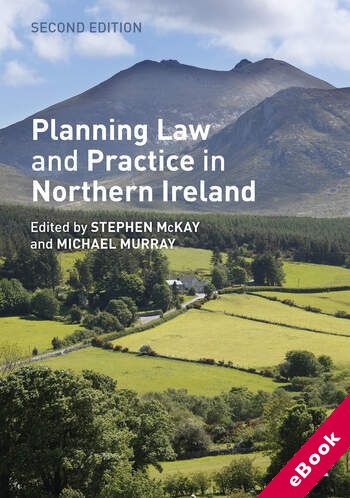
Each of the jurisdictions within the UK and Ireland is constantly refining the operational characteristics of its planning system and while there are some common practices, there are also substantive divergences. In each territory the planning template is shaped within a dynamic political and legal context and thus students and practitioners require an accessible, in-depth and up-to-date literature dealing with this matter. This book weaves an interpretive narrative of the statutes, case law and governance procedures that have helped shape the planning system of Northern Ireland with due regard being given to the combined influences emanating over time from European Union, UK and island of Ireland sources.
The multi-disciplinary contributors to this book explore the progression of planning in Northern Ireland and discuss prominent facets of contemporary development management, development plans, environmental law, property law and professional practice. Particular consideration is given to the consequences of Brexit for planning in Northern Ireland, devolved government institutional structures for planning, and the post-reform emergent performance of local authorities in this arena.
The book makes an important contribution to the wider literature in this field and, with its extensive citing of cases, provides an essential resource for students, planning practitioners and researchers.










