
The eBooks we sell are sold as a single-user licence and are intended for the end user only.
The sale of some eBooks are restricted to certain countries. To alert you to such restrictions, please select the country of the billing address of your credit or debit card you wish to use for payment.
For further information see https://www.wildy.com/ebook-formats
Once the order is confirmed an e-mail will be sent to you to allow you to download the eBook. For UK purchases this will be automatic. For purchases outside the UK a member of staff will need to confirm the sale. (Staff are available to do this during normal business hours, Mon-Fri 8:30-17:00 UK time)
All eBooks are supplied firm sale and cannot be returned. If you believe there is a fault with your eBook then contact us on ebooks@wildy.com and we will help in resolving the issue. This does not affect your statutory rights.
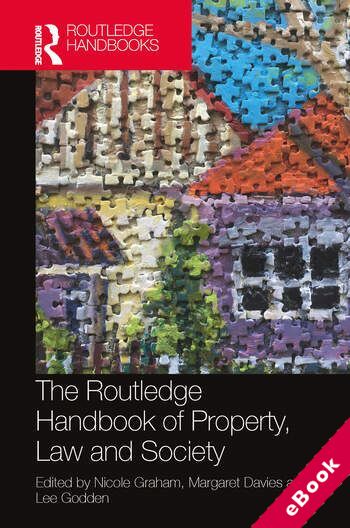
This handbook brings together diverse perspectives, major topics and multiple approaches to one of the biggest legal institutions in society: property.
Property touches on many fundamental human questions. It involves decisions about power, economy, morality, work and ecology. And involves ideas about where humans fit in the world and how humans relate to more-than-human life. This book will ask in myriad ways such questions as: what property means, what kinds of property there are, what is and should be the relationship between owned and owner, and what is the impact of different forms of property on life in this world? Drawing on a range of socio-legal and empirical methodologies, renowned scholars, and rising stars in property from around the world present current issues and map future directions in research. Coming from the place of law but reaching out through cognate disciplines, this handbook provides a comprehensive and accessible survey of current research at the interface of property, society and the environment.
This handbook will appeal to students and researchers across a range of disciplines including law, sociology, geography, history, and economics.











