
The eBooks we sell are sold as a single-user licence and are intended for the end user only.
The sale of some eBooks are restricted to certain countries. To alert you to such restrictions, please select the country of the billing address of your credit or debit card you wish to use for payment.
For further information see https://www.wildy.com/ebook-formats
Once the order is confirmed an e-mail will be sent to you to allow you to download the eBook. For UK purchases this will be automatic. For purchases outside the UK a member of staff will need to confirm the sale. (Staff are available to do this during normal business hours, Mon-Fri 8:30-17:00 UK time)
All eBooks are supplied firm sale and cannot be returned. If you believe there is a fault with your eBook then contact us on ebooks@wildy.com and we will help in resolving the issue. This does not affect your statutory rights.
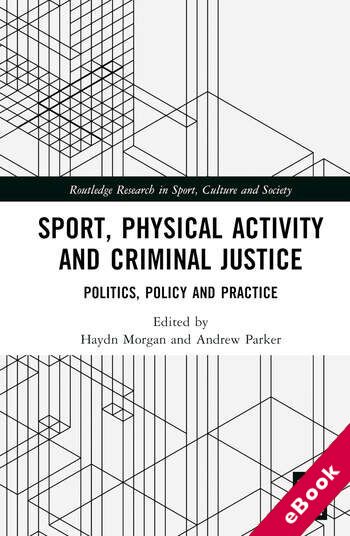
This book explores the various ways in which participation in sport and physical activity might contribute to effective solutions within criminal justice systems.
Focusing on a range of different sporting and physical activities across an array of social contexts involving both adult and youth populations, the book offers insight into the way in which sport and physical activity is interpreted by participants and practitioners, and how these interpretations relate to broader policy objectives within and across justice systems. It focuses on a series of key issues, including how sport policy (national and international) has developed in recent years in this area; how and to what extent such policy developments have impacted organisations and interventions (both custodial and non-custodial) across sport and criminal justice systems and sectors; and how participant cohorts (such as disadvantaged and/or ‘at-risk’ young people) have experienced these changes.
With shifting debates around criminal justice and the need for policy and practical solutions to extend beyond tougher and longer sentencing, this book is important reading for students, researchers, and practitioners working in sport pedagogy, sport-for-development, sport and leisure management, sport coaching, physical education, criminology, youth work, youth studies, social work, and health studies.










