
The eBooks we sell are sold as a single-user licence and are intended for the end user only.
The sale of some eBooks are restricted to certain countries. To alert you to such restrictions, please select the country of the billing address of your credit or debit card you wish to use for payment.
For further information see https://www.wildy.com/ebook-formats
Once the order is confirmed an e-mail will be sent to you to allow you to download the eBook. For UK purchases this will be automatic. For purchases outside the UK a member of staff will need to confirm the sale. (Staff are available to do this during normal business hours, Mon-Fri 8:30-17:00 UK time)
All eBooks are supplied firm sale and cannot be returned. If you believe there is a fault with your eBook then contact us on ebooks@wildy.com and we will help in resolving the issue. This does not affect your statutory rights.
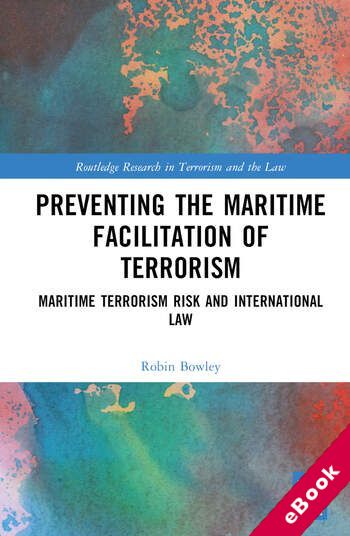
In the aftermath of the 9/11 attacks, concerns that terrorists might utilise vessels to transport weaponry, terrorist operatives and/or to finance their activities prompted several international legal developments.
This book evaluates the extent to which the international maritime security measures developed following the 9/11 attacks would be likely to prevent the utilisation of vessels to facilitate terrorist activities. It considers the likely effectiveness of the International Ship and Port Facility Security Code for improving vessel and port security, and the 2005 Protocol to the Convention for the Suppression of Unlawful Acts Against Maritime Navigation in facilitating the interdiction of suspected terrorist vessels. It also explains how the US-led Proliferation Security Initiative - a cooperative effort through which participant governments agree to prevent the illicit transfers of Weapons of Mass Destruction and related materials – has provoked debate about the legality of vessel interdictions under the United Nations Convention on the Law of the Sea (the LOSC). After exploring alternative interpretations of the LOSC, and states’ self-defence rights under Article 51 of the Charter of the United Nations, it formulates suggested guidelines for the unilateral interdiction of suspected terrorist support vessels in exceptional circumstances. The book also discusses the relevant recommendations by the OECD’s Financial Action Taskforce for preventing the financing of terrorism, and the national maritime security legislation for preventing the maritime facilitation of terrorist activities in the United Kingdom and in Australia. The book concludes by emphasising the importance of the continual active implementation of ship, port facility and supply chain security measures, and of further enhancing international cooperation to facilitate vessel interdictions.
It will be of interest to those working in the areas of Law and Terrorism, Law of the Sea, Maritime Law and Insurance and International Law.











