
The eBooks we sell are sold as a single-user licence and are intended for the end user only.
The sale of some eBooks are restricted to certain countries. To alert you to such restrictions, please select the country of the billing address of your credit or debit card you wish to use for payment.
For further information see https://www.wildy.com/ebook-formats
Once the order is confirmed an e-mail will be sent to you to allow you to download the eBook. For UK purchases this will be automatic. For purchases outside the UK a member of staff will need to confirm the sale. (Staff are available to do this during normal business hours, Mon-Fri 8:30-17:00 UK time)
All eBooks are supplied firm sale and cannot be returned. If you believe there is a fault with your eBook then contact us on ebooks@wildy.com and we will help in resolving the issue. This does not affect your statutory rights.
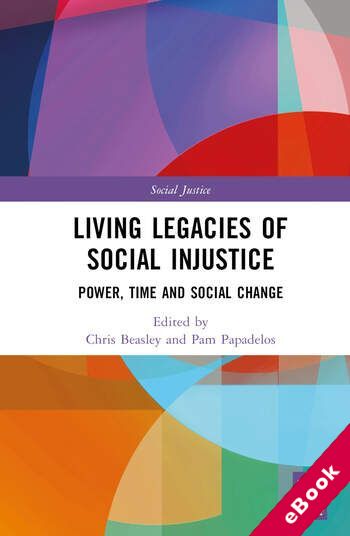
Through a wide range of international and interdisciplinary case studies, this book develops the notion of legacy, and in particular, ‘living legacy’– that is, it explores power relations in the context of time as a means to considering and challenging social injustice.
Legacies of social injustice are very frequently erased, denied or declared redundant. Framed by the concept of ‘legacy’, this book does not conceive legacy as simply referring to relics of the past, or to cultural heritage practices and artifacts. Instead, the book focuses upon ‘living legacies’, understood as ongoing, actively engaged in the re-constitution of power relations, and influential in the development of alternative political imaginaries. Through a variety of studies from many different contexts—including Indigenous trauma in Australia, displacement in Beirut, women travellers in Scotland, and heteronormativity in Hollywood—the book draws not only upon historiographic, sociological, legal, political, cultural and other disciplinary approaches, but also specifically makes use of feminist and postcolonial perspectives. Foregrounding the legacies of inequality and marginalisation, it contributes to a re-thinking of power and social change in ways that together suggest potential means for unsettling and reimagining such legacies.
This book will appeal to an interdisciplinary range of readers with interests and concerns in the broad area of social justice, but especially to those working in sociolegal studies, sociology, gender studies, indigenous studies and politics.










