
The eBooks we sell are sold as a single-user licence and are intended for the end user only.
The sale of some eBooks are restricted to certain countries. To alert you to such restrictions, please select the country of the billing address of your credit or debit card you wish to use for payment.
For further information see https://www.wildy.com/ebook-formats
Once the order is confirmed an e-mail will be sent to you to allow you to download the eBook. For UK purchases this will be automatic. For purchases outside the UK a member of staff will need to confirm the sale. (Staff are available to do this during normal business hours, Mon-Fri 8:30-17:00 UK time)
All eBooks are supplied firm sale and cannot be returned. If you believe there is a fault with your eBook then contact us on ebooks@wildy.com and we will help in resolving the issue. This does not affect your statutory rights.
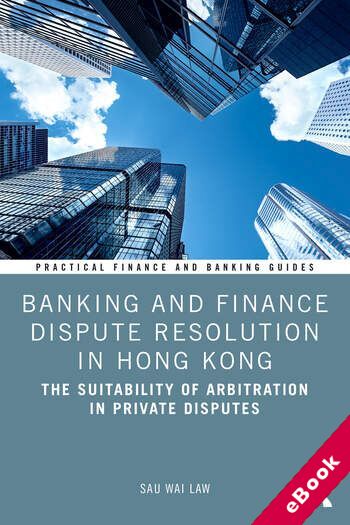
This book examines the concept of “Naming, Blaming, Claiming” in the application of arbitration for private banking dispute resolution. With dispute resolution proving to be a barrier for efficient operation of private banking, the author focuses on examining the Hong Kong context, blending theory and empirical evidence to provide readers with an understanding of how current disputes are resolved within the banking and finance industry, which will enable them to explore possible effective and efficient mechanisms to resolve their own financial disputes.
The book offers a comprehensive review of the laws and regulations governing the private banking industry in Hong Kong and selected jurisdictions, as well as how they are implemented. It examines the clients’ perceptions through an innovative methodology for empirical studies. Describing how clients react to the laws and regulations and the potential adverse impacts to the stability of the banking industry, the author identifies possible factors that could trigger another financial crisis. Synthesising his analysis, the author proposes newly discovered self-corrective mechanisms embedded among clients and concludes with policy recommendations. Directly relevant to banking practitioners, particularly legal and compliance departments, and senior management, the book is also written for legal professionals interested in the practices of dispute resolution in banking and finance. Additional readerships will include bank regulators, government officials and policy makers, researchers and those involved in courses in banking and financial law.










