
The eBooks we sell are sold as a single-user licence and are intended for the end user only.
The sale of some eBooks are restricted to certain countries. To alert you to such restrictions, please select the country of the billing address of your credit or debit card you wish to use for payment.
For further information see https://www.wildy.com/ebook-formats
Once the order is confirmed an e-mail will be sent to you to allow you to download the eBook. For UK purchases this will be automatic. For purchases outside the UK a member of staff will need to confirm the sale. (Staff are available to do this during normal business hours, Mon-Fri 8:30-17:00 UK time)
All eBooks are supplied firm sale and cannot be returned. If you believe there is a fault with your eBook then contact us on ebooks@wildy.com and we will help in resolving the issue. This does not affect your statutory rights.
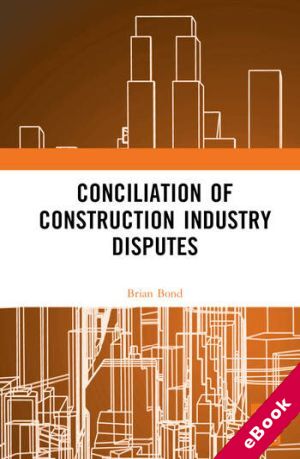
Conciliation of Construction Industry Disputes describes Conciliation as it has evolved and been practised in Ireland for the past 25 years and provides readers with practical guidance on this Alternative Dispute Resolution (ADR) method. Conciliation combines advantages of both mediation and adjudication and has been very widely practiced in Ireland over the last 25 years. It is low cost, quick and has been hugely successful. It continues to be the most used and preferred method of resolution of disputes in Irish construction contracts despite the introduction of statutory adjudication. The book includes a comparison of the various methods of ADR and will assess how Conciliation fits into them, noting the pros and cons of each. Conciliation is described in detail and the reasons for its success are analysed.
This book provides comprehensive guidance on how conciliation should be conducted to maximise its chance of being successful. Drawing on his wide experience of resolving disputes by conciliation, Brian Bond illustrates the problems which can be encountered and how they may be overcome. This book will be useful reading for all involved in construction contracts, construction managers, lawyers and legal advisers, conciliators, those aspiring to become conciliators and anyone looking for an alternative dispute resolution method to a construction contracts dispute.










