The eBooks we sell are sold as a single-user licence and are intended for the end user only.
The sale of some eBooks are restricted to certain countries. To alert you to such restrictions, please select the country of the billing address of your credit or debit card you wish to use for payment.
For further information see https://www.wildy.com/ebook-formats
Once the order is confirmed an e-mail will be sent to you to allow you to download the eBook. For UK purchases this will be automatic. For purchases outside the UK a member of staff will need to confirm the sale. (Staff are available to do this during normal business hours, Mon-Fri 8:30-17:00 UK time)
All eBooks are supplied firm sale and cannot be returned. If you believe there is a fault with your eBook then contact us on ebooks@wildy.com and we will help in resolving the issue. This does not affect your statutory rights.
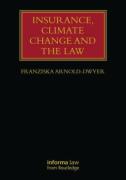
The insurance industry has found itself at the front line of climate change challenges, providing insurance cover in relation to risks associated with climate change. As risk carriers, insurers pay claims for climate change related losses - such as property damage caused by windstorms, flooding, and wildfires - which have been increasing in frequency and severity.
As major institutional investors, insurance companies invest in assets that may be increasingly vulnerable to climate risks. Insurance regulators across the globe have therefore started to require insurance companies to identify, manage and report on climate change risks that could pose a threat to their financial stability. However, managing and reporting on the effect of climate risk on an insurer’s balance sheet is an inward-looking perspective that does not stem climate change. It needs to be paired with an outward-looking perspective that takes account of the insurance industry’s impact on the environment, and the insurance industry’s capacity to influence what policyholders, investee enterprises and other business partners do to address climate change challenges. For the insurance industry, the key components of positive outward impact are “impact underwriting” and “impact investment”. This book sets out the current legal and regulatory landscape for impact underwriting and impact investment. Whilst the focus of research and regulatory interventions to date has been on inward impact, in this book it will be argued that, to take positive climate action that supports the Paris Agreement goals and the national and international Net Zero targets, the debate should now move on to considering the positive outward impact the insurance industry can make, and how we can create a legal environment to facilitate this.
The book puts forward the case for a new vision of the role of the insurance industry as climate action enablers and makes proposals for insurance products and risk transfer and loss resilience structures that can support policyholders in their transition to a Net Zero economy. The audience for this book will include legal practitioners, insurance industry professionals, financial and insurance regulators, policymakers and interested academics.