
The eBooks we sell are sold as a single-user licence and are intended for the end user only.
The sale of some eBooks are restricted to certain countries. To alert you to such restrictions, please select the country of the billing address of your credit or debit card you wish to use for payment.
For further information see https://www.wildy.com/ebook-formats
Once the order is confirmed an e-mail will be sent to you to allow you to download the eBook. For UK purchases this will be automatic. For purchases outside the UK a member of staff will need to confirm the sale. (Staff are available to do this during normal business hours, Mon-Fri 8:30-17:00 UK time)
All eBooks are supplied firm sale and cannot be returned. If you believe there is a fault with your eBook then contact us on ebooks@wildy.com and we will help in resolving the issue. This does not affect your statutory rights.
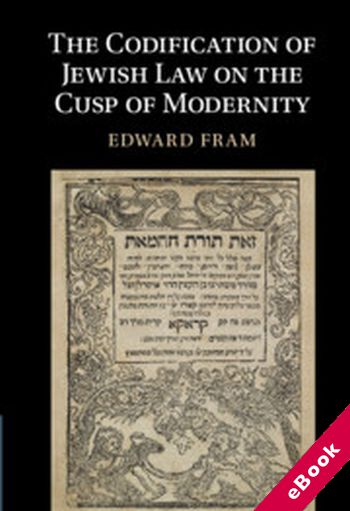
For more than four centuries, Jewish life has been based on a code of law written by Joseph Caro, his Shulḥan `aruk ['set table']. The work was an immediate best-seller because it presented the law in a clear and concise format. Caro's work, however, was methodologically problematic and was widely criticized in the first generations after its publication. In this volume, Edward Fram examines Caro's methods as well as those of two of his contemporaries, Moses Isserles and Solomon Luria. He highlights criticisms of Caro's legal thought and brings alternative methodologies to the fore. He also compares these three jurists, while placing their methods, and cases in their historical, intellectual, and religious contexts. Fram's volume ultimately explains why Caro's methodologically problematic work won the day, while more sophisticated approaches remained points of legal reference but fell short of achieving the acceptance that their authors hoped for.










