
The eBooks we sell are sold as a single-user licence and are intended for the end user only.
The sale of some eBooks are restricted to certain countries. To alert you to such restrictions, please select the country of the billing address of your credit or debit card you wish to use for payment.
For further information see https://www.wildy.com/ebook-formats
Once the order is confirmed an e-mail will be sent to you to allow you to download the eBook. For UK purchases this will be automatic. For purchases outside the UK a member of staff will need to confirm the sale. (Staff are available to do this during normal business hours, Mon-Fri 8:30-17:00 UK time)
All eBooks are supplied firm sale and cannot be returned. If you believe there is a fault with your eBook then contact us on ebooks@wildy.com and we will help in resolving the issue. This does not affect your statutory rights.
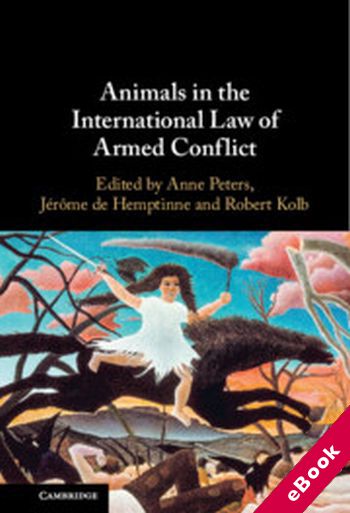
Animals are the unknown victims of armed conflicts. Wildlife populations usually decline during warfare, with disastrous repercussions on the food chain, on fragile ecosystems and precarious habitats. Belligerents take advantage of the chaos of war for poaching and trafficking of animal products. Livestock, companion, and zoo animals, highly dependent on human care, are direct victims of hostilities. The book is the first legal analysis of these issues. It maps the framework of international humanitarian law, examining which and how the concepts, principles, and rationales can be applied and adapted for a better protection of animals. The contributions inter alia discuss precautions for animal civilians, problems of animal combatants and prisoners, a specific status for veterinarian personnel, the recognition of biodiversity hotspots as specially protected zones, and the potential of enforcement mechanisms. The concluding chapter draws together novel interpretations and reform proposals.










