
The eBooks we sell are sold as a single-user licence and are intended for the end user only.
The sale of some eBooks are restricted to certain countries. To alert you to such restrictions, please select the country of the billing address of your credit or debit card you wish to use for payment.
For further information see https://www.wildy.com/ebook-formats
Once the order is confirmed an e-mail will be sent to you to allow you to download the eBook. For UK purchases this will be automatic. For purchases outside the UK a member of staff will need to confirm the sale. (Staff are available to do this during normal business hours, Mon-Fri 8:30-17:00 UK time)
All eBooks are supplied firm sale and cannot be returned. If you believe there is a fault with your eBook then contact us on ebooks@wildy.com and we will help in resolving the issue. This does not affect your statutory rights.
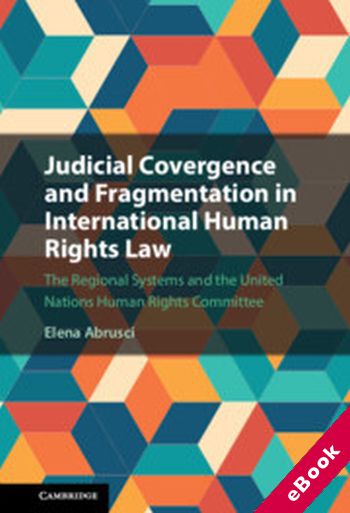
This book provides an innovative analysis of the complex issue of judicial convergence and fragmentation in international human rights law, moving the conversation forward from the assessment of the two phenomena and investigating their triggering factors. With a wide geographical focus that include the most up-to-date case-law from the three main regional systems (the African, European and Inter-American) and the UN Human Rights Committee, the book confirms the predominant judicial convergence across international human rights law. On this basis, the book engages with an interdisciplinary investigation into the legal and non-legal factors that could explain both convergence and fragmentation, ranging from the use of judicial dialogue and the notions of necessity and proportionality to the composition of the courts and the role of NGOs. The aim is to provide the tools to understand the dynamics between human rights adjudicatory bodies and possibly foresee future instances of judicial fragmentation.











