
The eBooks we sell are sold as a single-user licence and are intended for the end user only.
The sale of some eBooks are restricted to certain countries. To alert you to such restrictions, please select the country of the billing address of your credit or debit card you wish to use for payment.
For further information see https://www.wildy.com/ebook-formats
Once the order is confirmed an e-mail will be sent to you to allow you to download the eBook. For UK purchases this will be automatic. For purchases outside the UK a member of staff will need to confirm the sale. (Staff are available to do this during normal business hours, Mon-Fri 8:30-17:00 UK time)
All eBooks are supplied firm sale and cannot be returned. If you believe there is a fault with your eBook then contact us on ebooks@wildy.com and we will help in resolving the issue. This does not affect your statutory rights.
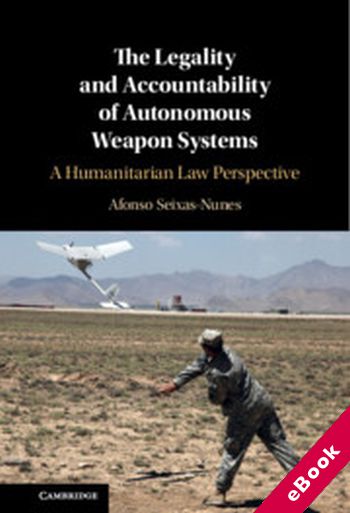
By adopting a multi-disciplinary approach, this book provides a comprehensive analysis of the legality of the use of autonomous weapons systems under international law. It examines different arguments presented by States, roboticists and scholars to demonstrate the challenges such systems will create for the laws of war. This study examines how technology of warfare seeks to increase the dissociation of risk and communication between weapons and their human operators. Furthermore, it explains how algorithms might give rise to 'errors' on the battlefield that cannot be directly attributed to human operators. Against this backdrop, Dr Seixas-Nunes examines three distinct legal frameworks: the distinction between the legality of weapons and the laws of targeting; different mechanisms of individual accountability and the importance of recovering the category of 'dolus eventualis' for programmers and technicians and, finally, State responsibility for violations of the laws of war caused by weapons' software errors.











