
The eBooks we sell are sold as a single-user licence and are intended for the end user only.
The sale of some eBooks are restricted to certain countries. To alert you to such restrictions, please select the country of the billing address of your credit or debit card you wish to use for payment.
For further information see https://www.wildy.com/ebook-formats
Once the order is confirmed an e-mail will be sent to you to allow you to download the eBook. For UK purchases this will be automatic. For purchases outside the UK a member of staff will need to confirm the sale. (Staff are available to do this during normal business hours, Mon-Fri 8:30-17:00 UK time)
All eBooks are supplied firm sale and cannot be returned. If you believe there is a fault with your eBook then contact us on ebooks@wildy.com and we will help in resolving the issue. This does not affect your statutory rights.
Winner, 2023 ISA Francesco Guicciardini Prize for Best Book in Historical International Relations, International Studies Association
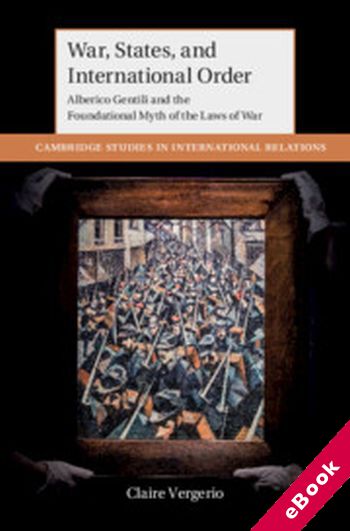
Who has the right to wage war? The answer to this question constitutes one of the most fundamental organizing principles of any international order. Under contemporary international humanitarian law, this right is essentially restricted to sovereign states. It has been conventionally assumed that this arrangement derives from the ideas of the late-sixteenth century jurist Alberico Gentili. Claire Vergerio argues that this story is a myth, invented in the late 1800s by a group of prominent international lawyers who crafted what would become the contemporary laws of war. These lawyers reinterpreted Gentili's writings on war after centuries of marginal interest, and this revival was deeply intertwined with a project of making the modern sovereign state the sole subject of international law. By uncovering the genesis and diffusion of this narrative, Vergerio calls for a profound reassessment of when and with what consequences war became the exclusive prerogative of sovereign states.










