The eBooks we sell are sold as a single-user licence and are intended for the end user only.
The sale of some eBooks are restricted to certain countries. To alert you to such restrictions, please select the country of the billing address of your credit or debit card you wish to use for payment.
For further information see https://www.wildy.com/ebook-formats
Once the order is confirmed an e-mail will be sent to you to allow you to download the eBook. For UK purchases this will be automatic. For purchases outside the UK a member of staff will need to confirm the sale. (Staff are available to do this during normal business hours, Mon-Fri 8:30-17:00 UK time)
All eBooks are supplied firm sale and cannot be returned. If you believe there is a fault with your eBook then contact us on ebooks@wildy.com and we will help in resolving the issue. This does not affect your statutory rights.
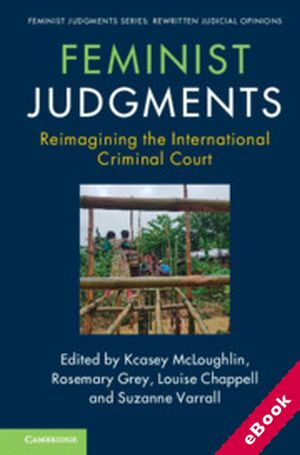
In the past decade, feminist scholars and women's rights activists have used the feminist judgment method to reimagine the relationship between law and gender justice, resulting in rewritten 'feminist' judgments from courts around the world. This groundbreaking book extends this approach and applies it to a wide range of decisions of the International Criminal Court (ICC), the Hague-based court with power to prosecute war crimes, crimes against humanity, genocide and aggression in over 120 countries. With over 60 contributors from the Global North and Global South, including countries where the ICC has been active, this book reflects an international and intersectional feminism. Diverse contributions reveal the gendered implications of crimes (both sexual and non-sexual), command responsibility, defences, complementarity, head of state immunity, sentencing, reparations and more.