
The eBooks we sell are sold as a single-user licence and are intended for the end user only.
The sale of some eBooks are restricted to certain countries. To alert you to such restrictions, please select the country of the billing address of your credit or debit card you wish to use for payment.
For further information see https://www.wildy.com/ebook-formats
Once the order is confirmed an e-mail will be sent to you to allow you to download the eBook. For UK purchases this will be automatic. For purchases outside the UK a member of staff will need to confirm the sale. (Staff are available to do this during normal business hours, Mon-Fri 8:30-17:00 UK time)
All eBooks are supplied firm sale and cannot be returned. If you believe there is a fault with your eBook then contact us on ebooks@wildy.com and we will help in resolving the issue. This does not affect your statutory rights.
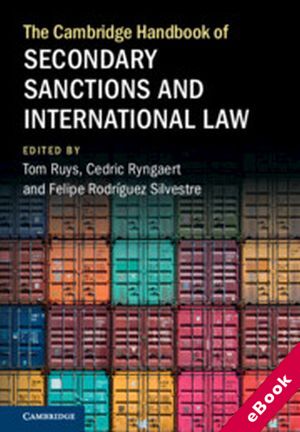
We live in an age of sanctions. For geopolitical reasons, powerful states and economic blocks increasingly impose unilateral measures restricting economic transactions with certain target states. These sanctions may apply to transactions between the sanctioning state and a target country but may at times also extend to transactions between third states and the target state. By imposing such 'secondary' sanctions, states aim to further isolate the target state. The extraterritorial character of secondary sanctions makes them controversial, as they impinge on third states' economic sovereignty and the latter's operators' freedom to conduct international business. This book addresses the legality of secondary sanctions from multiple legal perspectives, such as general international law, international economic law, and private law. It examines how third states and operators can legally react against secondary sanctions, e.g. via blocking legislation or litigation. It also provides economic and political perspectives on secondary sanctions.










