
The eBooks we sell are sold as a single-user licence and are intended for the end user only.
The sale of some eBooks are restricted to certain countries. To alert you to such restrictions, please select the country of the billing address of your credit or debit card you wish to use for payment.
For further information see https://www.wildy.com/ebook-formats
Once the order is confirmed an e-mail will be sent to you to allow you to download the eBook. For UK purchases this will be automatic. For purchases outside the UK a member of staff will need to confirm the sale. (Staff are available to do this during normal business hours, Mon-Fri 8:30-17:00 UK time)
All eBooks are supplied firm sale and cannot be returned. If you believe there is a fault with your eBook then contact us on ebooks@wildy.com and we will help in resolving the issue. This does not affect your statutory rights.
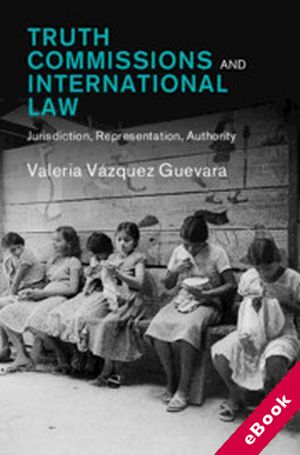
This book examines how truth commissions construct authoritative accounts of conflict, and how they account for the plurality of accounts across affected communities. Vázquez Guevara examines three of the earliest and most influential truth commissions: Argentina (1983–1984), Chile (1990–1991), and El Salvador (1992–1993), and examines how relevant cultural objects support or counter the official account for each. In doing so, she argues that these truth commissions drew on international law to authorise their accounts of violent conflict, and that this had the consequence of privileging an internationally-authorised truth over other truths, whilst simultaneously strengthening the authority of international law over the post-conflict state. By demonstrating how truth commissions turn to international law for authority, the book shows how this produces an official account of past violence and promises of future community, which fundamentally affects how communities live together in the aftermath of violent conflict.










