
The eBooks we sell are sold as a single-user licence and are intended for the end user only.
The sale of some eBooks are restricted to certain countries. To alert you to such restrictions, please select the country of the billing address of your credit or debit card you wish to use for payment.
For further information see https://www.wildy.com/ebook-formats
Once the order is confirmed an e-mail will be sent to you to allow you to download the eBook. For UK purchases this will be automatic. For purchases outside the UK a member of staff will need to confirm the sale. (Staff are available to do this during normal business hours, Mon-Fri 8:30-17:00 UK time)
All eBooks are supplied firm sale and cannot be returned. If you believe there is a fault with your eBook then contact us on ebooks@wildy.com and we will help in resolving the issue. This does not affect your statutory rights.
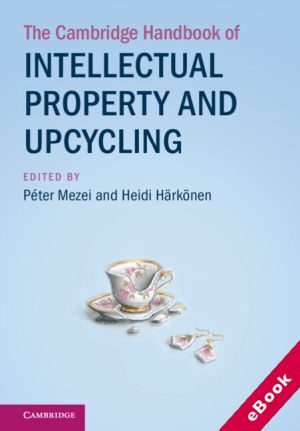
Upcycling is an emerging green business model that involves transforming broken, old, useless or worn-out products into new items. Despite its importance to the circular economy, upcycling involves certain risks relating to intellectual property (IP) law. This research handbook analyses the meaning and promise of upcycling in a circular economy, as well as the fundamental conceptual elements of this phenomenon. It provides a systematic collection of chapters on the potential relevance of upcycling in all major areas of IP law. It also takes a geographical approach, including six chapters that primarily cover the policy considerations of upcycling on all inhabited continents. Furthermore, it addresses fields of science with either indirect or loose connections to IP and upcycling, such as economic, psychological, and social justice issues. The book supports upcycling at doctrinal, practical, and policy levels, and suggests measures to align the IP system with the objectives of the circular economy.










