
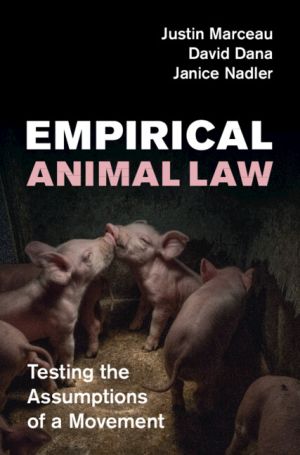
Empirical Animal Law challenges long-held assumptions about what animal law reforms help or harm animals. Drawing on original empirical studies and a broad interdisciplinary body of research, the book tests whether familiar tools of advocacy such as incremental reforms, criminal prosecutions, litigation, and protest really reduce animal suffering. Moving beyond moral intuition and ideology the book reveals how people perceive animal harm, which messages and messengers persuade, and when well-intentioned strategies may backfire.
With chapters on factory farming reforms, criminal punishment, litigation strategy, protest backlash, and moral framing, Empirical Animal Law offers the first comprehensive, data-driven account of how animal law operates in practice and calls for a new empirically informed movement.










